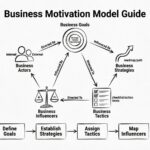


Organizations often struggle to translate high-level strategy into actionable execution. This gap typically arises because goals lack structural integrity or fail to align with the underlying operational reality. The Business Motivation Model (BMM) offers a rigorous framework for defining, organizing, and validating these strategic intentions. By applying BMM logic, leaders can ensure that every objective serves a clear purpose and connects logically to the resources required for success. This guide explores how to validate business goals effectively using established modeling principles.
Validation is not merely about checking boxes; it is about verifying the logical consistency of the strategic plan. It involves examining the relationships between actors, goals, means, and influences. When these elements are properly structured, the organization gains clarity on what drives value and what hinders progress. This document provides a deep dive into the mechanics of goal validation within the BMM context.
🏗️ Understanding the Business Motivation Model Framework
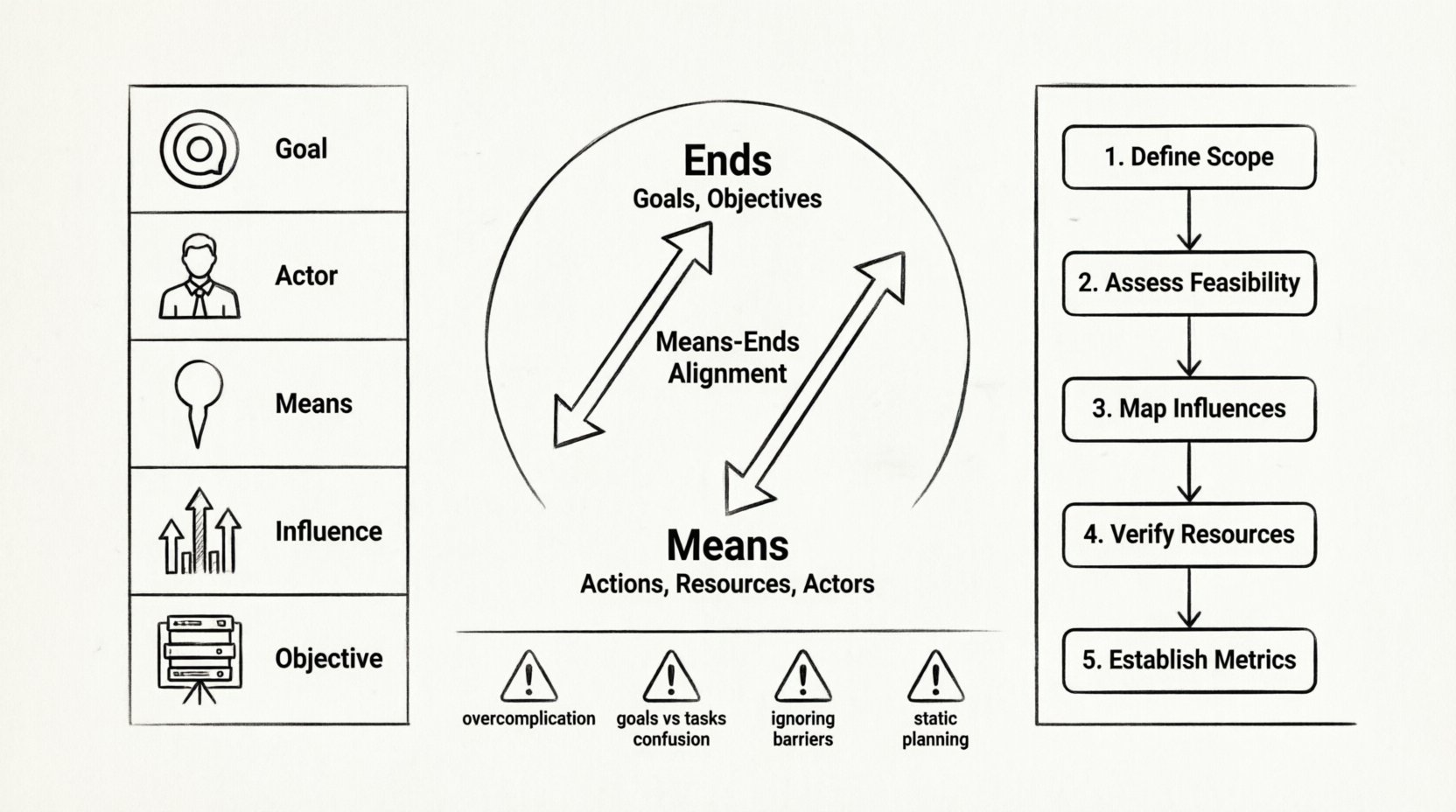
The Business Motivation Model is a standardized approach designed to capture the essential elements of business planning. It moves beyond simple lists of tasks to create a map of intent. The core philosophy rests on the distinction between ends and means. Ends represent what the organization wants to achieve, while means represent how it intends to achieve them.
To validate goals, one must first understand the specific components defined within the model. A robust model includes:
- Goals: Desired outcomes that are measurable and time-bound.
- Objectives: Specific targets that support the broader goals.
- Directives: Requirements or constraints that must be adhered to.
- Resources: Assets available to support the means.
- Actors: The people or systems responsible for executing tasks.
- Influences: Factors that positively or negatively impact the realization of goals.
When validating business goals, you are essentially auditing the connections between these components. A goal without a defined actor or resource is merely a wish. A goal without a positive influence or a negative influence removed is often unrealistic.
🔗 The Logic of Alignment: Connecting Means to Ends
Alignment is the backbone of a valid strategic plan. In BMM logic, alignment is established through specific relationships. The most critical relationship is the Means-Ends link. This link answers the question: “Does this specific action contribute directly to the desired outcome?”
Validation requires tracing these links backward from the highest-level strategic goal down to the daily operational tasks. If a gap exists, the goal is likely invalid or the execution plan is insufficient.
Consider the following logical checks for alignment:
- Vertical Alignment: Do tactical objectives support the strategic goals? Every lower-level goal should roll up to support a higher-level goal.
- Horizontal Alignment: Do different departments share compatible objectives? Conflicting goals between sales and operations create friction that invalidates the overall strategy.
- Resource Alignment: Are there sufficient resources assigned to the means? If a goal requires significant capital but no budget is allocated, the goal is invalid.
Without this logical flow, organizations suffer from fragmentation. Teams work in silos, and efforts cancel each other out. Validation ensures that the logic holds together under scrutiny.
📋 Components Required for Goal Validation
Before declaring a goal valid, specific attributes must be present. The BMM provides a checklist of necessary elements. If any element is missing, the goal remains abstract and unactionable.
| Component | Validation Question | Outcome if Missing |
|---|---|---|
| Goal | Is the outcome clearly defined and measurable? | Ambiguity leads to varied interpretations. |
| Actor | Who is responsible for achieving this? | Accountability is lost. |
| Means | What actions or resources are required? | Execution cannot begin. |
| Influence | What external factors affect success? | Risk is unmanaged. |
| Objective | Is the target specific and time-bound? | Progress cannot be measured. |
Using a table like this helps teams systematically review their plans. It forces a discussion about each component rather than glossing over the details. For instance, a goal might exist without a defined actor. In this scenario, validation fails until ownership is assigned.
🚀 Steps to Validate Strategic Objectives
Validation is an iterative process. It involves reviewing the model repeatedly as the business environment changes. The following steps outline a practical approach to ensuring goals remain valid over time.
1. Define the Scope and Boundaries
Every goal must have a clear scope. Determine what is included in the goal and what is excluded. This prevents scope creep, which often invalidates strategic initiatives by making them too broad to manage. Define the boundaries of the model context to ensure focus.
2. Assess Feasibility and Constraints
Review the means available against the desired ends. Ask hard questions about feasibility. Is the technology in place? Is the workforce skilled enough? Are there regulatory constraints? If the constraints make the goal impossible, the goal must be revised or the means must be adjusted.
3. Map the Influence Factors
Identify all external and internal influences. Some influences are positive (drivers), while others are negative (barriers). A valid goal acknowledges these factors. If a major barrier exists and no mitigation strategy is in the means, the goal is at risk. Documenting these influences allows for proactive risk management.
4. Verify Resource Allocation
Resources include financial capital, human capital, time, and technology. Validate that the budget and personnel assigned match the complexity of the goal. A common error is assigning a high-level strategic goal to a team without the necessary authority or budget to execute it.
5. Establish Measurement Criteria
How will success be known? Objectives must be quantifiable. Use key performance indicators (KPIs) that align with the BMM objectives. If a goal cannot be measured, it cannot be validated. Set thresholds for what constitutes success and failure.
⚠️ Common Pitfalls in Goal Modeling
Even with a structured model, errors occur. Recognizing common pitfalls helps prevent them during the validation phase. Understanding these traps improves the quality of the strategic plan.
- Overcomplication: Trying to model every single detail can obscure the main strategy. Keep the model high-level enough to remain useful but detailed enough to be actionable.
- Confusing Goals with Tasks: A task is an activity. A goal is an outcome. Validating a task as a goal leads to busy work that does not produce value.
- Ignoring Negative Influences: Focusing only on drivers while ignoring barriers creates false confidence. A goal is not valid if the barriers are insurmountable.
- Lack of Stakeholder Input: Goals created in isolation often lack buy-in. Validation requires input from all actors involved to ensure the goals are realistic.
- Static Planning: Treating the model as a one-time document. Business conditions change, and the model must evolve to remain valid.
📏 Measuring Success with Influence Factors
Measuring success goes beyond simple output metrics. In the BMM, influence factors play a crucial role in understanding the health of the goal. Positive influences increase the likelihood of goal achievement, while negative influences decrease it.
When validating goals, assess the strength of these influences. A goal supported by strong positive influences and mitigated negative influences is robust. Conversely, a goal with weak drivers and strong barriers is fragile.
Consider the following categories of influences:
- Market Trends: External shifts that affect demand or competition.
- Internal Capabilities: The skills and technology available within the organization.
- Regulatory Environment: Laws and compliance requirements.
- Stakeholder Sentiment: The attitude of customers, employees, and investors.
By mapping these influences to specific goals, you create a dynamic view of risk and opportunity. This allows for continuous validation as conditions shift.
🔄 Integrating Feedback Loops
A valid model is not static. It requires feedback loops to maintain integrity over time. Feedback loops allow the organization to learn from execution and adjust the goals accordingly.
There are two primary types of feedback loops to integrate:
- Operational Feedback: Data from daily operations that indicates whether the means are working as intended. If the means are not producing the expected results, the goal or the means must be adjusted.
- Strategic Feedback: Information from the market or competitive landscape that suggests the goal itself may need to change. If the goal is no longer relevant, it should be retired or redefined.
Integrating these loops ensures that the business motivation model remains a living document. It prevents the organization from persisting with invalid goals simply because they were established long ago.
🤝 Ensuring Stakeholder Consensus
Validation is not just a technical exercise; it is a social one. Stakeholders must agree on the validity of the goals for the plan to succeed. Different departments often have conflicting priorities.
To ensure consensus, follow these practices:
- Transparent Communication: Share the model and the logic behind the goals with all relevant parties.
- Conflict Resolution: Actively seek out and resolve conflicts between departmental objectives.
- Shared Ownership: Ensure that actors feel ownership over the goals they are assigned.
- Regular Reviews: Hold scheduled meetings to review the goals and validate their continued relevance.
When stakeholders are aligned, the organization moves with greater cohesion. Disagreement often signals a flaw in the goal definition or a lack of understanding of the broader context.
🛡️ Maintaining Model Integrity Over Time
Once validated, the model requires maintenance. Business environments are volatile, and goals that were valid last year may not be valid today. Regular audits of the model are necessary.
Conduct periodic reviews to check for:
- Obsolete Goals: Goals that no longer align with the current strategy should be archived.
- New Influences: Emerging risks or opportunities that were not previously considered.
- Resource Changes: Shifts in budget or personnel that affect the ability to execute.
- Logic Gaps: New information that reveals broken connections between means and ends.
Maintaining integrity ensures that the organization remains agile. It prevents the inertia that often plagues large enterprises. By keeping the model fresh, the business can adapt quickly to new challenges.
🚧 Practical Application Scenarios
To illustrate these concepts, consider a hypothetical scenario involving a retail organization.
Scenario: The organization wants to increase online sales by 20% in the next fiscal year.
Validation Process:
- Goal Definition: Is “increase online sales by 20%” specific? Yes. Is it time-bound? Yes.
- Means Identification: What actions will drive this? (e.g., website optimization, marketing campaign, new logistics partner).
- Resource Check: Do we have the budget for the marketing campaign? Do we have the IT staff for website optimization?
- Influence Check: Are there seasonal trends that affect online sales? Is there a new competitor entering the market?
- Actor Assignment: Who manages the marketing? Who manages the IT?
If any of these steps fail, the goal is not validated. For example, if the IT staff is not available, the means are invalid. The goal must be adjusted to reflect the reality of the resources.
🔍 Deep Dive into Means-Ends Relationships
The Means-Ends relationship is the most complex part of the BMM. It requires a clear understanding of causality. A means is not a goal. A means is a tool used to achieve a goal.
Common confusion arises when an intermediate objective is mistaken for a final goal. For instance, “Launch the new software” is an objective (a means). “Improve customer satisfaction” is the goal (the end). Validating the model ensures that the launch of the software is actually linked to the improvement of satisfaction.
Use the following questions to test the relationship:
- Does achieving this means guarantee progress toward the goal?
- Is there a direct line of sight between the action and the outcome?
- If we stop doing this means, does the goal become impossible to achieve?
If the answer to the last question is no, the means may be unnecessary. If the answer to the first question is no, the means may be ineffective. Both scenarios require revision of the model.
📉 Handling Negative Influences
Negative influences are often overlooked during the planning phase. They represent risks or barriers that can derail a goal. In the BMM, these are modeled as influences that reduce the likelihood of goal achievement.
Validating goals requires a stress test against these influences. Ask: “What is the worst-case scenario?” If the worst-case scenario makes the goal impossible, the goal is not valid in its current form.
Strategies for handling negative influences include:
- Mitigation: Taking steps to reduce the impact of the influence.
- Transfer: Shifting the risk to a third party.
- Avoidance: Changing the goal or means to avoid the influence entirely.
- Acceptance: Acknowledging the risk and preparing a contingency plan.
By explicitly modeling these influences, leaders can make informed decisions about whether to pursue a goal or to adjust the strategy.
🌐 Expanding the Model Scope
As the organization grows, the BMM must expand. A single goal may spawn multiple sub-goals across different regions or departments. Validation at this scale requires a hierarchical approach.
Ensure that the logic holds at every level of the hierarchy. A strategic goal at the top must be supported by tactical goals at the middle, which are supported by operational tasks at the bottom. If the chain is broken at any level, the entire structure is compromised.
Regular cross-level reviews help maintain this integrity. They ensure that the strategic vision is not lost in the translation to operational tasks.
🎓 Conclusion on Model Logic
Validating business goals using Business Motivation Model logic is a discipline that requires attention to detail and a commitment to clarity. It moves strategy from a vague aspiration to a structured plan of action. By rigorously checking components, relationships, and influences, organizations can ensure their goals are robust and achievable.
The process is not about finding a perfect plan immediately. It is about creating a framework that can be tested, challenged, and refined. This flexibility is the key to long-term success in a dynamic business environment.