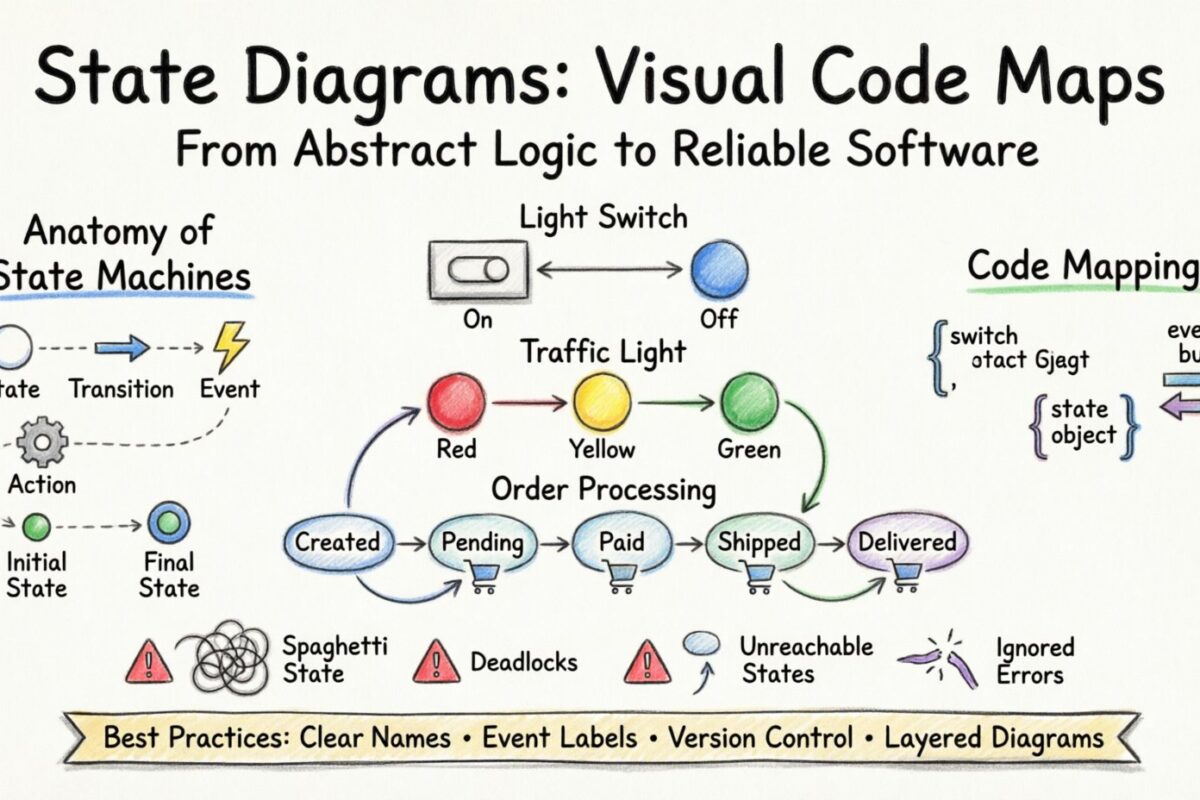
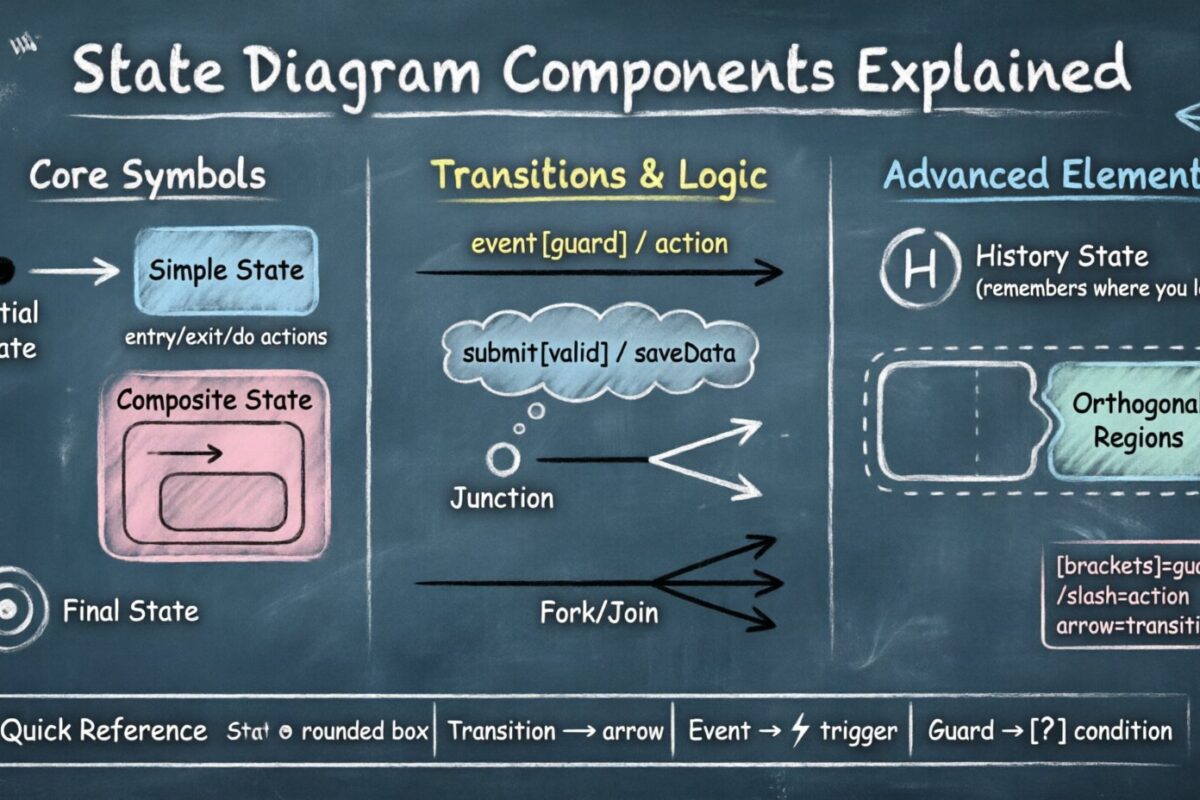
The behavior of an entity is not only a direct consequence of its inputs, but it also depends on its preceding state. The past history of an entity can best…
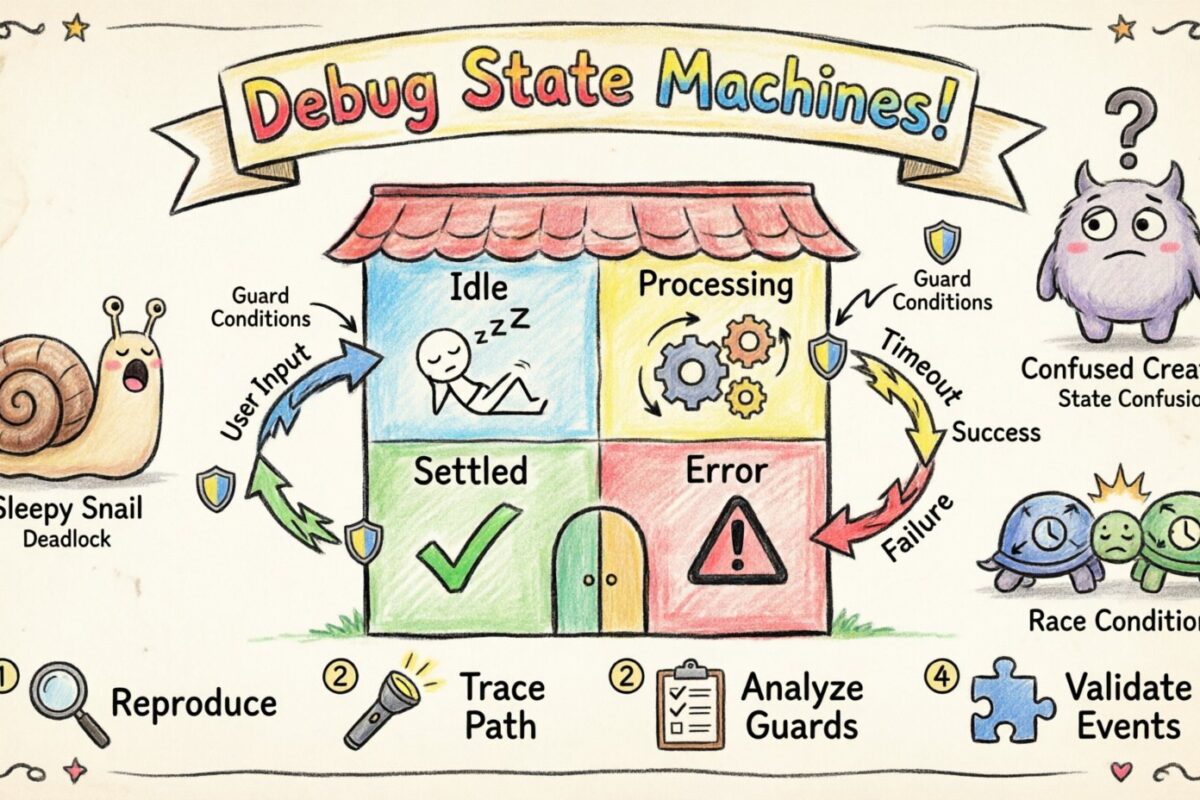
Designing state machines is an exercise in precision. A single misplaced transition or an undefined event can cascade into unpredictable system behavior. When the code executes, it often follows the…
In software engineering and system design, logic often begins as abstract thought. How does a system react when a user logs in? What happens when a payment fails? How does…
In today’s fast-paced business landscape, the gap between a great idea and a viable strategy can make or break innovation. Founders, product managers, and enterprise leaders often face the same…
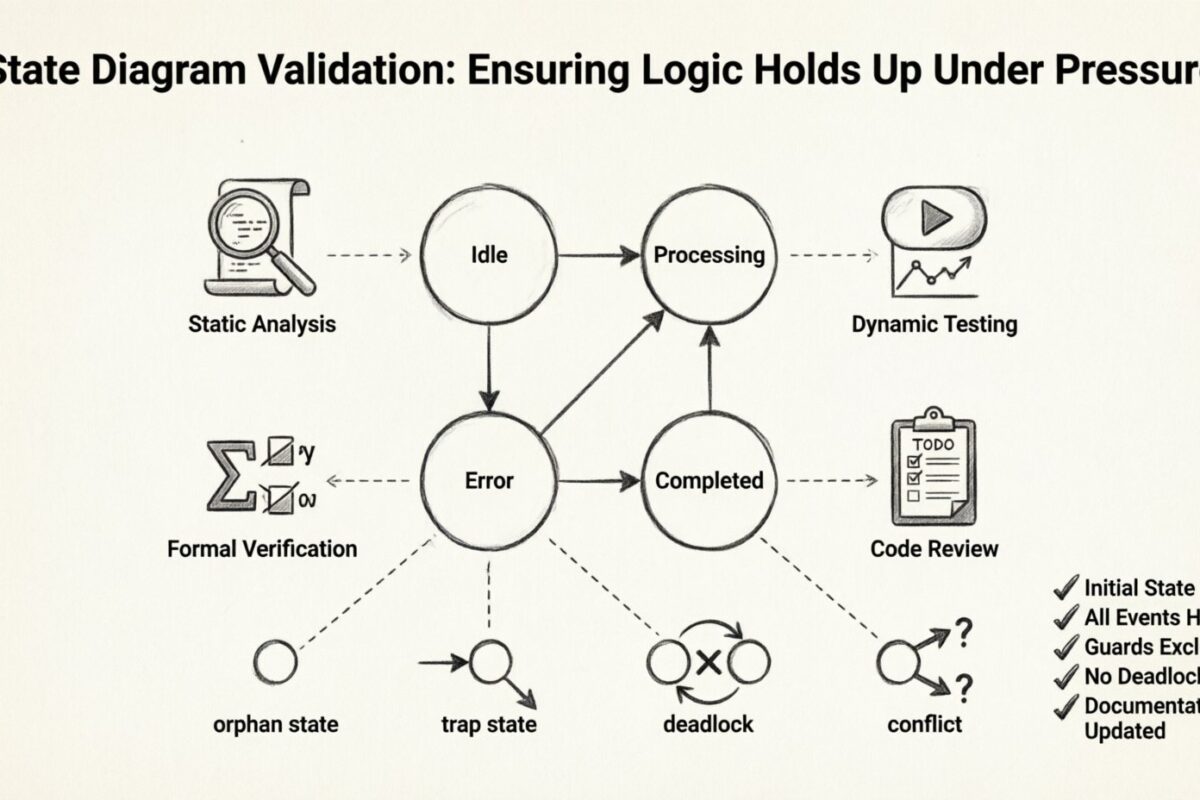
Designing complex systems requires more than just drawing boxes and arrows. It demands a rigorous approach to logic verification. When building state machines, the visual representation often masks underlying flaws…
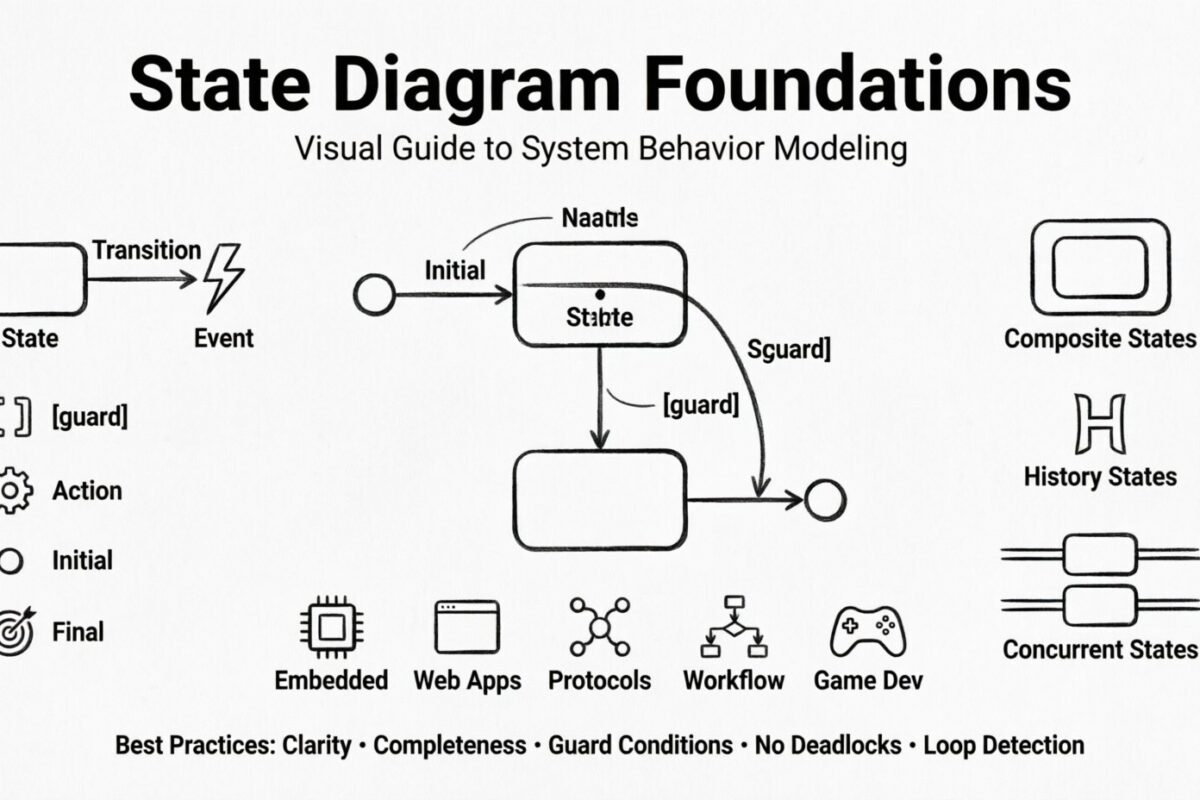
Understanding how a system behaves over time is critical for designing robust software and complex mechanical processes. A state diagram, often referred to as a state machine diagram, provides the…
Building reliable software systems requires more than just writing functional code. It demands a clear understanding of how the system behaves under various conditions. State Machine Diagrams, often referred to…
A state diagram, often referred to as a state machine diagram within the Unified Modeling Language (UML) framework, serves as a critical tool for visualizing the dynamic behavior of a…
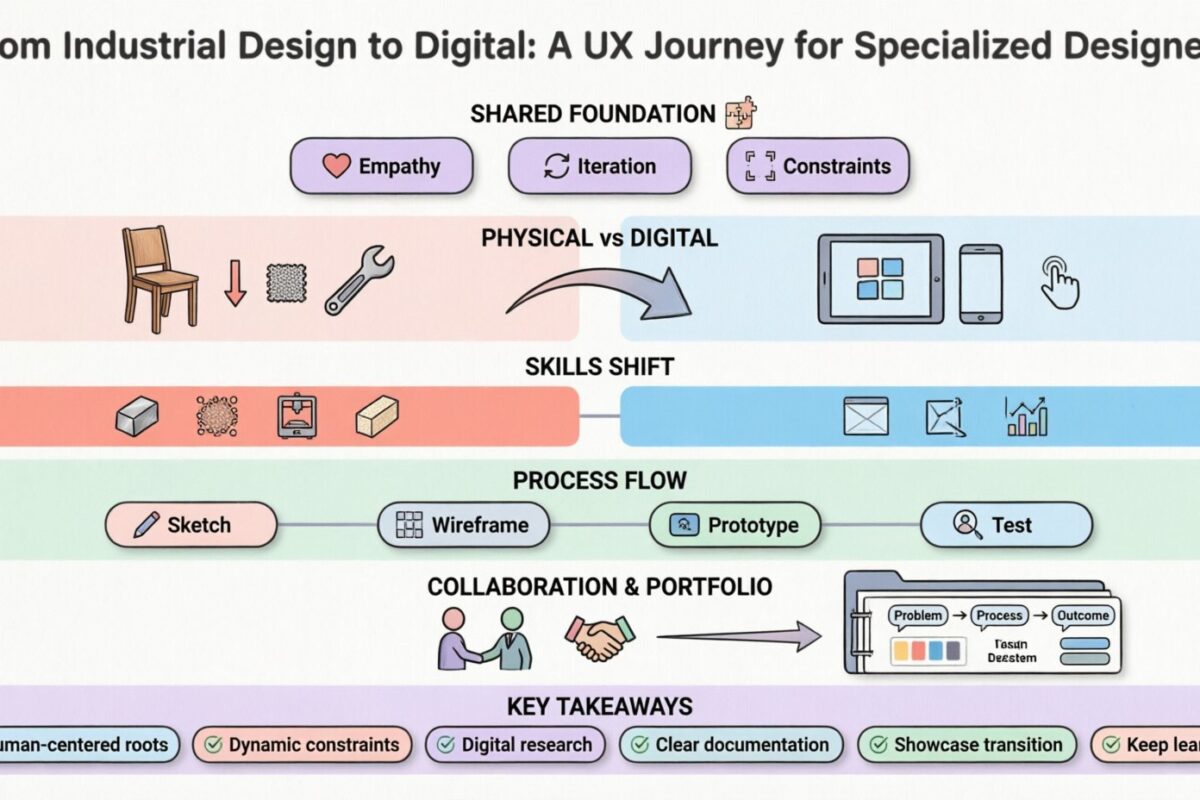
Transitioning from the tangible world of industrial design into the fluid landscape of user experience design represents a significant pivot in creative practice. Both disciplines share a foundational commitment to…
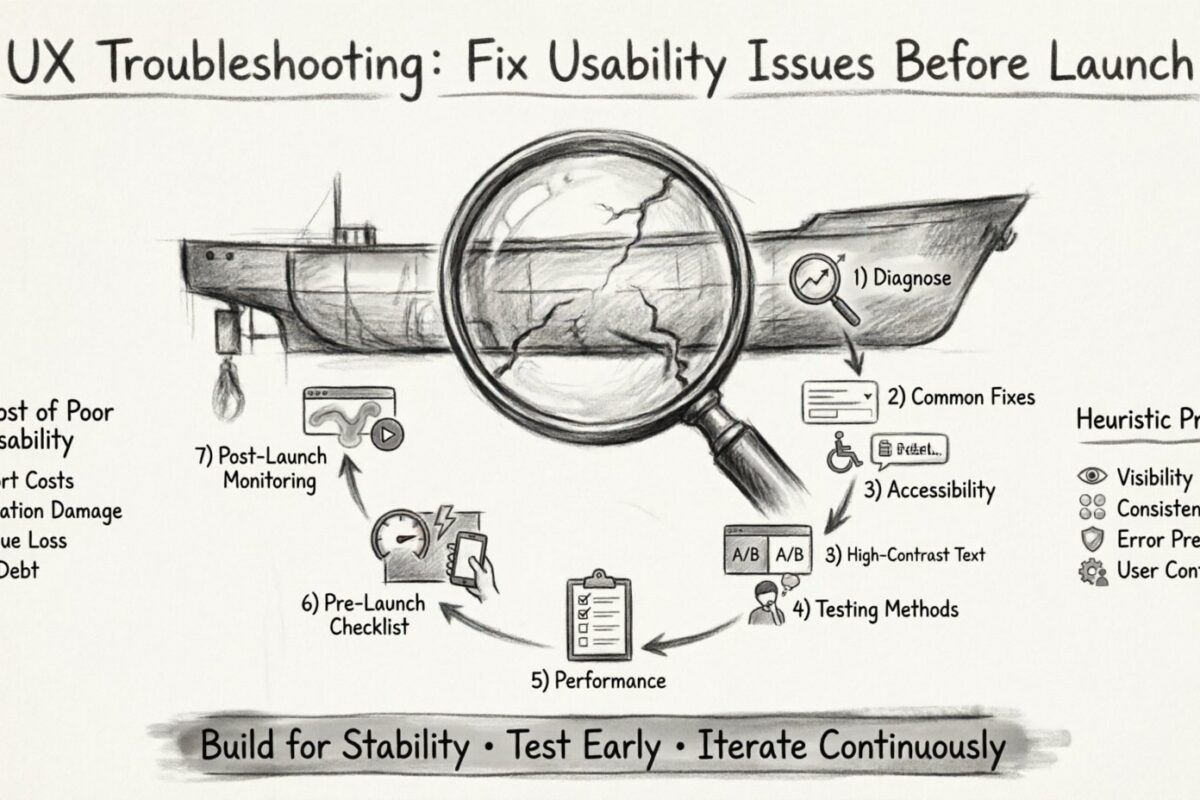
Releasing a digital product without a thorough review of user experience is akin to launching a vessel without checking the hull for leaks. While design aesthetics attract attention, usability ensures…