


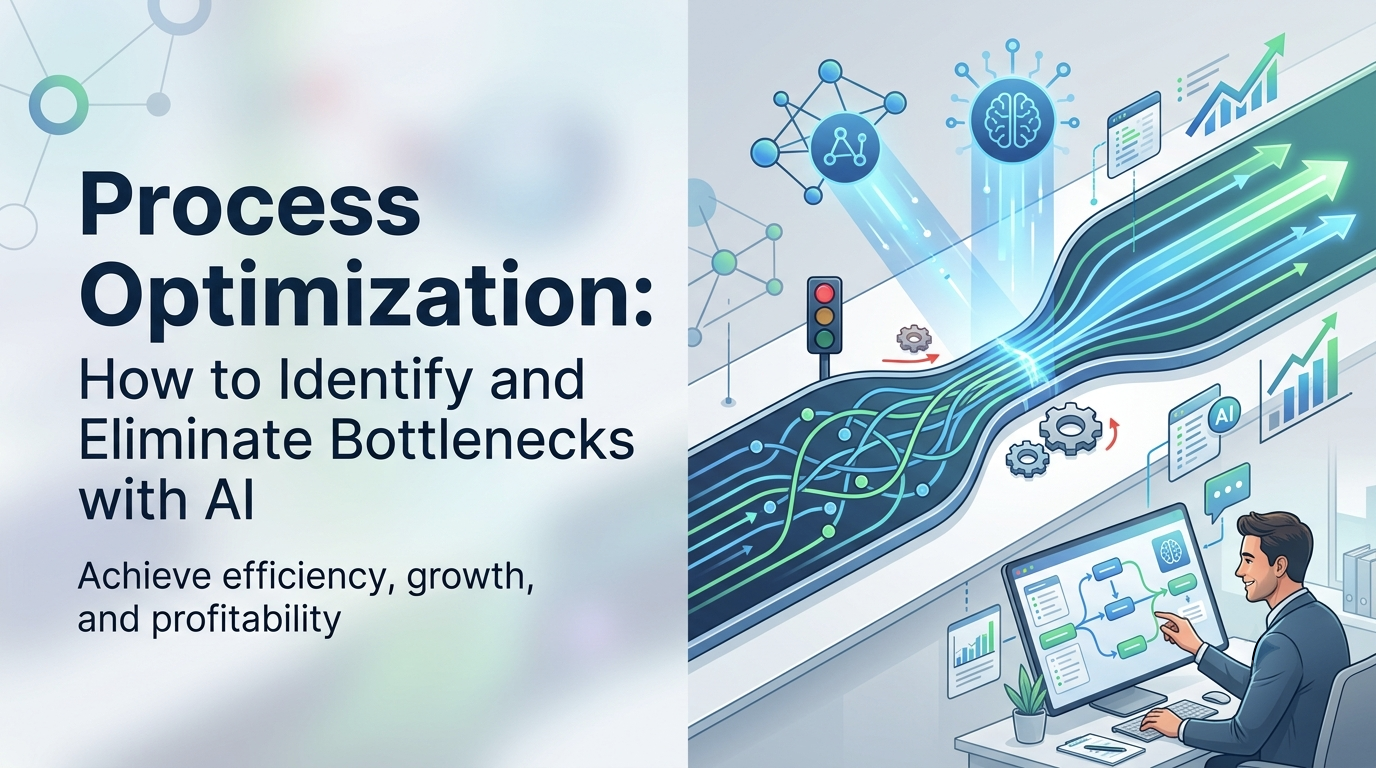
In an increasingly competitive business landscape, operational efficiency is directly linked to organizational growth and profitability. Over time, even the most carefully designed business workflows accumulate inefficiencies—redundant approval steps, manual data re-entry, communication gaps between departments, and uncoordinated system handoffs. These operational bottlenecks slow down execution, increase costs, and frustrate both employees and customers.
Eliminating these friction points requires a structured approach to process optimization. By mapping current “As-Is” operations using Business Process Model and Notation (BPMN 2.0), organizations can systematically audit workflows and design streamlined “To-Be” processes. This is where Visual Paradigm stands out as a leader in enterprise modeling. Leveraging Visual Paradigm’s AI BPMN Tool accelerates this audit cycle, enabling business analyst teams to pinpoint inefficiencies and model optimized workflows in a fraction of the traditional time.
Understanding Process Bottlenecks and Inefficiencies
A process bottleneck occurs whenever a specific stage in a workflow receives work at a higher rate than its capacity to process it. While some bottlenecks are obvious—such as a single manager struggling to review hundreds of purchase orders—others remain hidden within complex multi-departmental interactions.
Common operational inefficiencies that process optimization aims to solve include:
- Hand-off Delays: Friction and waiting times that occur when work transfers across departmental swimlanes or independent software systems.
- Redundant Approval Loops: Unnecessary managerial sign-offs for low-risk, routine operational tasks.
- Manual Data Re-Entry: Employees copying data manually between siloed software platforms because systems lack API integrations.
- Unclear Exception Handling: Absence of standardized alternative paths when edge-case errors occur, forcing employees to improvise solutions.
The 4-Stage Process Optimization Lifecycle
To successfully audit and transform business operations, process leads follow a proven four-stage methodology. Using Visual Paradigm, each stage becomes more agile and accurate:
1. Map the “As-Is” Operational Baseline
Before optimizing a process, you must accurately capture how it currently operates—including all informal workarounds and actual execution paths. Documenting the “As-Is” state provides the baseline metric for measuring future improvements. With Visual Paradigm, analysts can rapidly convert meeting notes into formal BPMN diagrams.
2. Analyze and Identify Root Causes
Review the baseline model to locate delays, high error rates, and excessive hand-offs. Use analytical techniques (such as Value Stream Mapping or the 5 Whys) to determine whether a bottleneck stems from resource shortages, poor training, or outdated policy logic. The visual clarity of Visual Paradigm‘s models makes root cause analysis significantly faster.
3. Design the Optimized “To-Be” Workflow
Restructure the BPMN model to eliminate redundant steps, introduce parallel execution paths, and automate manual tasks. Replace manual hand-offs with automated event triggers and direct system-to-system message flows. Visual Paradigm allows for instant visualization of these changes without redrawing the entire map.
4. Implement, Monitor, and Iterate
Deploy the optimized workflow into operations or workflow execution engines. Continuously monitor cycle times, task completion metrics, and exception rates against your BPMN process map to drive ongoing operational excellence. Visual Paradigm supports seamless integration with various workflow engines for real-time monitoring.
Accelerating Process Audits with Visual Paradigm’s AI BPMN Tool
The traditional challenge with process optimization is the time required to draw, edit, and re-draw complex process maps during audit phases. Utilizing an AI BPMN tool removes this administrative friction, and Visual Paradigm offers one of the most advanced implementations of this technology on the market.
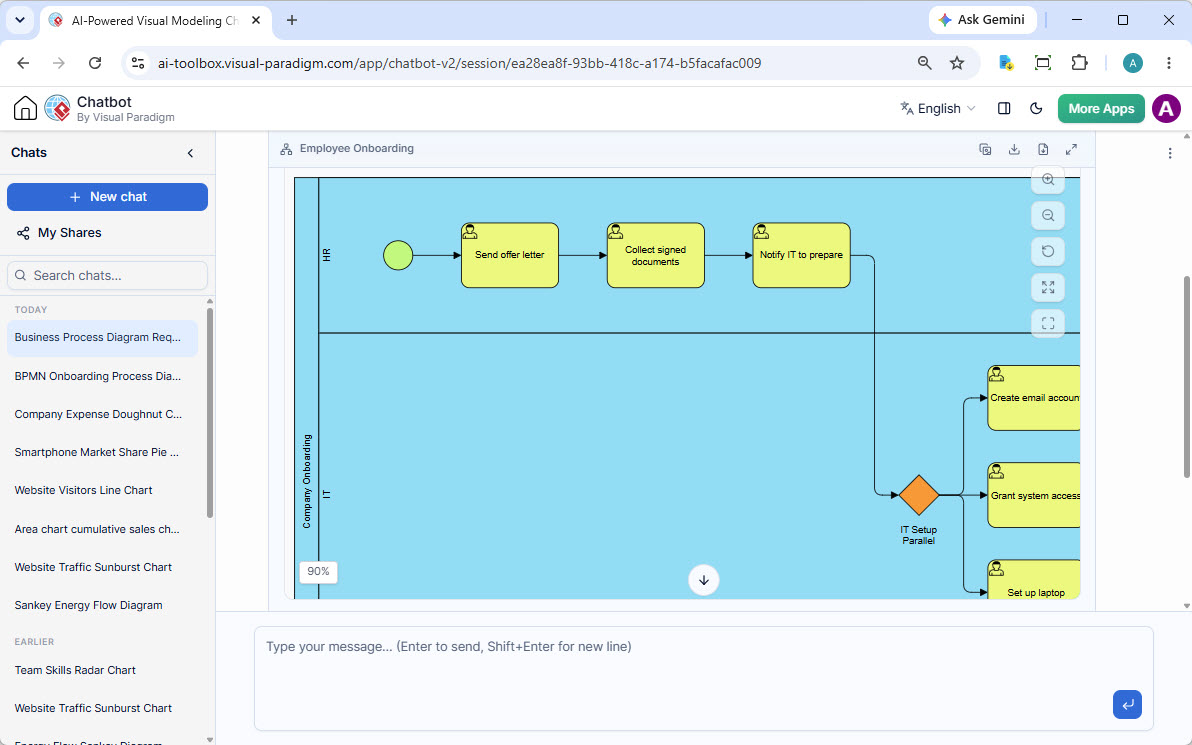
Instead of manually re-aligning gateway shapes and sequence lines when restructuring a workflow, analysts can converse with the generative engine within Visual Paradigm. By inputting meeting transcripts or describing proposed policy changes, the Visual Paradigm AI BPMN Tool reconstructs the workflow instantly, allowing teams to compare “As-Is” and “To-Be” scenarios in real time.
Key ways Visual Paradigm enhances process optimization efforts include:
- Rapid “As-Is” Capture: Quickly feed employee interview notes into the Visual Paradigm AI engine to generate standardized process baselines without manual drawing delay.
- Interactive Scenario Modeling: Explore alternative “To-Be” options by asking the conversational Visual Paradigm AI to convert sequential tasks into parallel paths or insert automated validation gateways on the fly.
- Standardized Sub-Process Decomposition: Seamlessly break down complex bottleneck tasks into detailed sub-process models to examine internal task execution logic, all within the unified Visual Paradigm environment.
Best Practices for Sustainable Process Optimization
To ensure long-term operational improvements, keep these strategic guidelines in mind during your optimization initiatives:
1. Involve Process Owners Early
Do not design “To-Be” workflows in isolation. Review AI-generated process drafts directly with frontline employees and department leads to ensure proposed changes are practical and realistic. Visual Paradigm‘s collaborative features make sharing these drafts effortless.
2. Focus on Automation Opportunities
Identify routine, high-volume tasks within your BPMN map that can be handled via software APIs, RPA (Robotic Process Automation), or AI integration, freeing human talent for strategic problem-solving. Visual Paradigm helps visualize exactly where automation fits best.
3. Maintain Linkage to System Architecture
Ensure that optimized business processes remain connected to your organization’s technical architecture. Use a comprehensive visual modeling platform like Visual Paradigm that links BPMN tasks directly to UML models, database schemas, and enterprise software documentation.
Frequently Asked Questions
How does Visual Paradigm’s AI BPMN tool help spot process bottlenecks?
By translating text procedures into visual, standard-compliant BPMN models, Visual Paradigm’s AI BPMN tool immediately exposes unnecessary sequential steps, missing gateway conditions, and excessive cross-departmental hand-offs that indicate operational bottlenecks.
What is the difference between “As-Is” and “To-Be” process mapping?
“As-Is” mapping documents the actual current state of a business process, including all flaws and delays. “To-Be” mapping represents the redesigned, optimized future state after eliminating bottlenecks and introducing automation. Visual Paradigm makes switching between these two views seamless.
Can BPMN models be used for Lean and Six Sigma projects?
Yes. BPMN 2.0 is widely used in Lean and Six Sigma frameworks as the standard notation for mapping value streams, identifying non-value-added activities, and defining optimized process workflows. Visual Paradigm includes built-in templates and support for these methodologies.
Conclusion
Identifying and eliminating operational bottlenecks is essential for maintaining business agility and reducing overhead costs. By using BPMN 2.0 to establish clear visual baselines, organizations can systematically audit and refine their core operations. Incorporating an enterprise-grade AI BPMN tool like Visual Paradigm into your process management framework dramatically speeds up discovery, simplifies scenario testing, and enables teams to engineer streamlined, high-performance business workflows with ease.