


Entering the professional world after graduation is a pivotal moment. For students with backgrounds in Computer Science or Design, the field of User Experience (UX) offers a dynamic intersection of technology and human behavior. This guide explores the diverse pathways available, the unique advantages each background brings, and the strategies needed to navigate this evolving landscape. Whether you are coming from a coding background or an art foundation, there is a place for you in digital product creation. 🚀
Understanding the UX Landscape 🌐
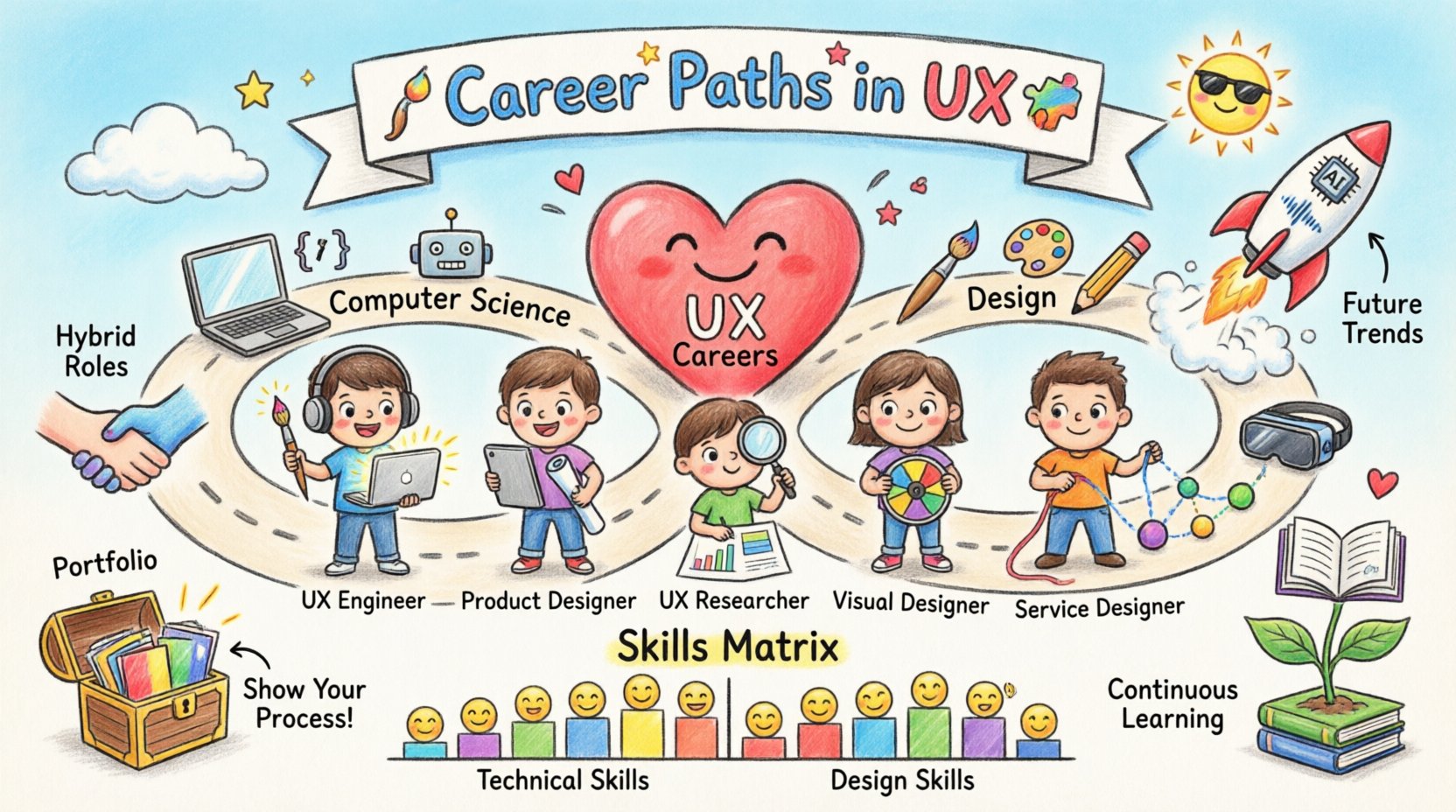
User Experience encompasses every aspect of a person’s interaction with a product, service, or system. It is not merely about how something looks; it is about how it functions, how accessible it is, and how it feels to use. The role of a UX professional involves research, design, testing, and implementation. As technology advances, the demand for individuals who can bridge the gap between engineering capabilities and user needs continues to grow.
Companies across various sectors—from healthcare to finance, education to entertainment—are investing heavily in digital experiences. This investment creates a wide array of job titles and responsibilities. Understanding these distinctions helps graduates align their skills with the right opportunities.
The Computer Science Graduate’s Edge 💻
Graduates with a degree in Computer Science possess a deep understanding of how software is built. This technical foundation provides a distinct advantage when entering the UX field. You understand constraints, feasibility, and the logic behind user flows.
Key Opportunities for CS Graduates
- UX Engineer: This role blends design and development. You build prototypes and design systems directly in code, ensuring that the final product matches the intended vision.
- Product Designer: With technical knowledge, you can make informed decisions about what is feasible to build, speeding up the iteration process.
- Researcher: Data analysis skills are crucial for user research. You can quantify user behavior through analytics and A/B testing more effectively than non-technical peers.
- Interaction Designer: Understanding state changes and logic helps in designing complex interactions that respond naturally to user input.
Skills to Leverage
CS graduates often have strong analytical abilities. You can translate user feedback into technical requirements. Your familiarity with databases and APIs allows you to understand how backend constraints affect frontend experiences. However, you may need to develop empathy and visual design sensibilities to complement your technical prowess.
The Design Undergraduate’s Advantage 🎨
Design students bring a strong foundation in visual communication, typography, and layout. They understand the psychology of perception and how to guide a user’s eye through an interface. Their training in critique and iteration prepares them well for the feedback loops common in product development.
Key Opportunities for Design Graduates
- Visual Designer: Focuses on the aesthetic aspects of the product, ensuring consistency and brand alignment.
- UX Researcher: Excels at qualitative research methods, such as user interviews and usability testing, to understand motivations.
- Service Designer: Looks at the entire ecosystem of a service, mapping out touchpoints across physical and digital channels.
- UX Designer: Focuses on the overall flow and structure of the experience, ensuring tasks are completed efficiently.
Skills to Leverage
Designers are often adept at storytelling. They can present complex problems and solutions visually. Their portfolio demonstrates their ability to think critically about form and function. To succeed in technical environments, learning the basics of how systems work can enhance your collaboration with engineering teams.
Bridging the Gap: Hybrid Roles 🔗
The industry increasingly values individuals who can speak both languages. A hybrid role often requires a mix of technical understanding and design intuition. These positions are highly sought after because they reduce friction between departments.
Common Hybrid Responsibilities
- Creating design systems that developers can easily implement.
- Conducting feasibility studies during the early research phase.
- Prototyping interactive mockups that demonstrate behavior.
- Facilitating workshops that include stakeholders from engineering, design, and business.
Building a portfolio that showcases this duality is essential. Show projects where you coded a prototype, or designs where you optimized for technical performance. This demonstrates your ability to operate at the intersection.
Essential Skills Matrix 📊
Different roles require different skill sets. The following table outlines core competencies required across various UX paths. These are not exhaustive but represent the foundational requirements for entry-level and mid-level positions.
| Role | Primary Focus | Technical Skill Level | Design Skill Level |
|---|---|---|---|
| UX Researcher | User Behavior & Insights | Medium (Analytics) | Medium (Visualization) |
| UX Designer | Flow & Structure | Low (Prototyping) | High (Wireframing) |
| Visual Designer | Aesthetics & Brand | Low (Export Assets) | High (Visual Systems) |
| UX Engineer | Implementation & Logic | High (Coding) | Medium (Design Tools) |
| Product Designer | End-to-End Experience | Medium | High |
Building a Strong Portfolio 📁
Your portfolio is your most important asset. It serves as proof of your capabilities and your thought process. Employers want to see how you approach problems, not just the final visual output.
Portfolio Best Practices
- Show the Process: Include case studies that detail the problem, your research, the iterations, and the final solution. Explain why you made certain decisions.
- Contextualize Projects: Describe the constraints you worked within. Was it a tight deadline? A complex technical limitation? This adds realism.
- Quality over Quantity: It is better to have three deep case studies than ten superficial ones. Recruiters spend a limited amount of time on each portfolio.
- Accessibility: Demonstrate that you consider accessibility in your designs. Mention how you ensured color contrast, screen reader compatibility, or keyboard navigation.
- Clarity: Write clearly. Use headings and bullet points to make your case studies skimmable. Avoid jargon where simple language works.
Navigating the Job Market 📈
The job market for UX professionals is competitive. Standing out requires a strategic approach to networking and application.
Networking Strategies
- Industry Events: Attend local meetups, conferences, and workshops. These are excellent for meeting peers and hiring managers.
- Online Communities: Participate in forums and social media groups dedicated to design and technology. Share your work and ask for feedback.
- Informational Interviews: Reach out to professionals in roles you aspire to. Ask about their day-to-day tasks and advice for newcomers.
- Mentorship: Find a mentor who can provide guidance on career progression and portfolio reviews.
Application Tips
- Tailor Your Resume: Highlight relevant projects and skills for each specific job description. Do not send a generic resume to every opening.
- Prepare for Interviews: Expect portfolio presentations. Be ready to walk through your work and answer questions about your design choices.
- Practice Design Challenges: Many companies use take-home assignments or whiteboard sessions. Practice solving these problems within a set timeframe.
Continuous Learning 📚
The field of technology changes rapidly. Tools evolve, and user expectations shift. Staying current is not optional; it is a requirement for long-term success.
- Read Industry Publications: Follow blogs and newsletters that discuss trends in design and engineering.
- Courses and Certifications: Consider additional training in specialized areas like data analysis or accessibility standards.
- Experiment: Dedicate time to personal projects. Build a website, design a concept, or write a blog post. This keeps your skills sharp.
- Feedback Loops: Seek critiques from peers. Accept constructive criticism and use it to improve your work.
Future Trends in the Industry 🌟
Several trends are shaping the future of user experience. Understanding these early can position you as a forward-thinking candidate.
- Artificial Intelligence: AI is changing how products personalize experiences. Understanding how to integrate AI ethically and effectively is becoming a valuable skill.
- Voice and Gesture: As devices move beyond screens, designers must consider voice commands and hand gestures as primary interaction methods.
- Inclusive Design: There is a growing emphasis on creating products that work for everyone, regardless of ability or background.
- Immersive Technologies: Virtual and augmented reality are opening new avenues for spatial design and interaction.
Final Thoughts on Career Growth 🌱
Career paths in UX are rarely linear. You might start as a researcher and move into design, or begin in engineering and transition to product management. The skills you acquire are transferable. Focus on building a strong foundation in human-centered principles and remain adaptable.
For Computer Science and Design undergraduates, the opportunities are abundant. The key is to recognize your unique strengths and actively seek environments where those strengths are valued. Whether you are writing code or sketching wireframes, your contribution matters. The goal is to create digital products that are useful, usable, and delightful for everyone who interacts with them.
Start exploring today. Build your portfolio, connect with professionals, and keep learning. The future of digital experience is built by people who care about the intersection of technology and humanity.
Related posts:
 Mastering the Art of User Experience Design: A Complete Guide for CS and HCI Students
 From Industrial Design to Digital: A UX Journey for Specialized Designers
 The Beginner’s Roadmap to UX Design: Quick Start Strategies for Tech Students
 UX Design: Deep Dive into Human-Computer Interaction: Principles and Practices for Undergraduates