


The shift toward location independence has transformed the modern workforce. However, the freedom to work from anywhere comes with a unique set of challenges. A SWOT analysis for digital nomads provides a structured method to evaluate your current situation. It helps you identify internal strengths and weaknesses alongside external opportunities and threats. This framework is essential for anyone aiming to manage risks while working remotely.
Without a clear strategy, the nomadic lifestyle can lead to burnout, financial instability, or legal complications. By applying this analytical model, you gain clarity on your business viability and personal resilience. This guide breaks down every quadrant of the framework with practical examples.
🔍 Understanding the SWOT Framework for Location Independence
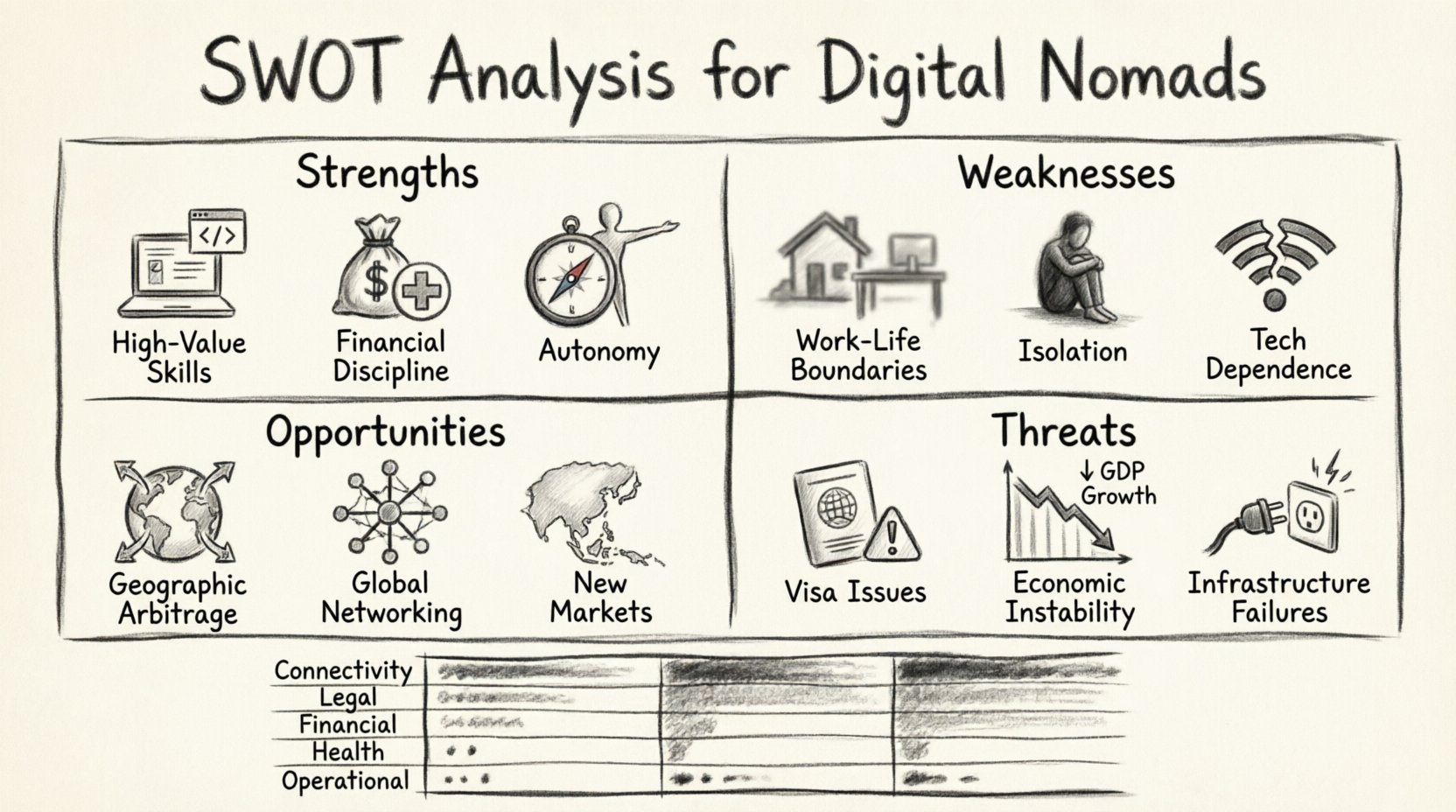
SWOT stands for Strengths, Weaknesses, Opportunities, and Threats. Originally a business tool, it adapts perfectly to the solo entrepreneur or remote professional. In the context of digital nomadism, the analysis extends beyond revenue to include lifestyle sustainability and personal well-being.
- Internal Factors: These are elements you control. They include your skills, financial reserves, and discipline levels.
- External Factors: These are elements outside your control. They include visa laws, internet infrastructure, and global economic trends.
Conducting this assessment allows you to make informed decisions about where to live, what work to accept, and how to structure your life. It is not a one-time event but a recurring practice.
💪 Strengths: Leveraging Your Internal Advantages
Strengths are the positive attributes you possess that give you an edge in the remote work environment. Recognizing these helps you capitalize on them when planning your next move.
1. High-Value Skill Sets
Many nomads succeed because they offer specialized services. Your expertise might include:
- Software development or coding.
- Content creation and copywriting.
- Graphic design or video editing.
- Consulting in specific industries like finance or marketing.
Identifying your core competencies ensures you can compete globally, regardless of your physical location.
2. Financial Discipline and Reserves
Financial stability is a cornerstone of remote success. Your strengths here might involve:
- Maintaining an emergency fund covering six months of expenses.
- Having low overhead costs due to a minimalistic lifestyle.
- Diversifying income streams across multiple clients or products.
These factors provide a safety net when income fluctuates or travel plans change unexpectedly.
3. Adaptability and Autonomy
The ability to work independently is crucial. You may possess:
- Strong self-management skills without direct supervision.
- Flexibility to adjust to different time zones.
- The ability to troubleshoot technical issues without IT support.
These traits allow you to navigate the unpredictability of travel and remote collaboration effectively.
⚠️ Weaknesses: Addressing Internal Vulnerabilities
Weaknesses are internal limitations that could hinder your progress or increase risk. Honest self-assessment is required to address these areas.
1. Lack of Work-Life Boundaries
When your home is also your office, the separation blurs. Common weaknesses include:
- Working late into the night due to lack of structure.
- Difficulty disconnecting from client demands.
- Procrastination caused by the allure of tourism.
Addressing this requires strict scheduling and dedicated workspaces.
2. Isolation and Mental Health
Remote work can be lonely. You might struggle with:
- Missing social interaction found in traditional offices.
- Feeling disconnected from a support network.
- Increased stress due to constant change.
Building a community and prioritizing mental health are necessary countermeasures.
3. Technology Dependence
Your work relies heavily on hardware and connectivity. Weaknesses here include:
- Lack of backup hardware for critical devices.
- Unfamiliarity with cybersecurity best practices.
- Poor internet setup in temporary accommodations.
Investing in redundancy, such as backup devices and mobile hotspots, mitigates this risk.
🚀 Opportunities: Capitalizing on External Possibilities
Opportunities are external chances to grow or improve your situation. These often arise from market trends or geographical advantages.
1. Geographic Arbitrage
Earning in a strong currency while living in a lower-cost region increases savings potential. You can:
- Relocate to countries with a lower cost of living.
- Extend your runway with the same income.
- Invest surplus funds into assets or education.
2. Global Networking
Traveling exposes you to diverse professional circles. You might:
- Connect with collaborators in different markets.
- Find mentors who offer unique perspectives.
- Discover new service demands in emerging economies.
3. Access to New Markets
Being present in a region can open doors. Consider:
- Tailoring services to local businesses.
- Understanding cultural nuances to improve communication.
- Partnering with local agencies for larger projects.
⛈️ Threats: Identifying External Risks
Threats are external factors that could cause trouble. Identifying these early allows you to create contingency plans.
1. Regulatory and Visa Issues
Immigration laws change frequently. Risks include:
- Visa overstays leading to fines or deportation.
- Lack of legal right to work in a specific country.
- Restrictions on long-term stays.
2. Economic Instability
Global events can impact your income. Threats involve:
- Currency fluctuation affecting your purchasing power.
- Client budget cuts during economic downturns.
- Inflation increasing the cost of travel.
3. Infrastructure Failures
Reliability varies by location. You must consider:
- Internet outages or slow speeds.
- Power grid instability.
- Healthcare access in remote areas.
📊 Risk Assessment Matrix
To visualize the relationship between risk and impact, use the following table. This helps prioritize which threats need immediate attention.
| Category | Risk Factor | Impact Level | Mitigation Strategy |
|---|---|---|---|
| Connectivity | Internet Outage | High | Maintain mobile hotspot backup and offline work capabilities. |
| Legal | Visa Non-Compliance | Critical | Track visa expiry dates and maintain legal residency status. |
| Financial | Currency Devaluation | Medium | Hold funds in stable currencies and diversify banking. |
| Health | Medical Emergency Abroad | High | Secure comprehensive international health insurance. |
| Operational | Hardware Failure | Medium | Keep spare equipment and cloud backups for all data. |
🛡️ Managing Risks While Working Remotely
Once you have identified your SWOT elements, the next step is action. Managing risks involves creating systems that protect your work and lifestyle.
1. Financial Resilience
Build a robust financial foundation. This includes:
- Keeping separate accounts for business and personal expenses.
- Automating savings transfers to an emergency fund.
- Monitoring cash flow weekly to anticipate shortfalls.
2. Legal Compliance
Stay informed about local laws. Actions to take include:
- Registering with local tax authorities if required.
- Understanding digital nomad visa requirements.
- Keeping digital copies of all important documents.
3. Health and Safety
Prioritize your physical well-being. Consider:
- Obtaining travel insurance that covers pre-existing conditions.
- Knowing the location of the nearest embassy or consulate.
- Establishing a routine for exercise and nutrition.
4. Cybersecurity
Protect your data from external threats. Best practices include:
- Using a virtual private network (VPN) on public networks.
- Enabling two-factor authentication on all accounts.
- Encrypting sensitive files and backups.
🔄 Building Resilience Through Regular Review
A SWOT analysis is dynamic. Your situation changes as you travel, earn, and grow. Schedule a review every quarter to update your findings.
- Review Income: Has your revenue stream diversified or narrowed?
- Review Skills: Are your skills still in demand?
- Review Location: Does your current location still offer the benefits you need?
- Review Relationships: Is your support network strong enough?
Updating these factors ensures your strategy remains relevant. It prevents complacency and keeps you alert to new dangers or chances.
📝 Actionable Steps for Implementation
Begin your analysis with a dedicated session. Follow this process to get started:
- Gather Data: Collect information on your finances, skills, and current location.
- Brainstorm: Write down every point for Strengths, Weaknesses, Opportunities, and Threats.
- Prioritize: Select the top three items for each category.
- Develop Strategies: Create a plan to maximize strengths and opportunities while minimizing weaknesses and threats.
- Execute: Implement the changes immediately.
- Monitor: Set a calendar reminder for the next review.
🌱 Long-Term Sustainability
The goal of this analysis is long-term sustainability. It is not about working harder, but working smarter within your unique constraints. By acknowledging the risks inherent in remote work, you reduce anxiety and increase confidence.
Many nomads fail because they ignore the structural weaknesses of their setup. They focus only on the freedom of travel. By balancing the lifestyle with professional rigor, you build a career that lasts. This approach ensures that your work supports your life, rather than your life becoming a constant struggle to support your work.
Remember that stability is a choice. It requires constant attention to the details of your business and your personal well-being. Use this framework as your compass. It will guide you through the uncertainties of the digital landscape.
🎯 Final Thoughts on Remote Work Strategy
Applying a SWOT analysis to your digital nomad career is a strategic move. It moves you from passive drifting to active navigation. You gain control over your variables and prepare for the variables you cannot control.
Whether you are a freelancer, contractor, or business owner, the principles remain the same. Focus on your core competencies, shore up your vulnerabilities, seek out growth areas, and protect yourself from external shocks. This disciplined approach leads to a sustainable and fulfilling location-independent life.
Start your assessment today. Document your findings. Make the necessary adjustments. Your future self will thank you for the preparation.
Related posts:
 SWOT Analysis for Startups: A Beginner’s Step-by-Step Guide to Launching Strong
 The 5-Minute SWOT Analysis: Quick Start Framework for Freelancers and Sole Proprietors
 SWOT Analysis Breakdown: How to Decode Your Business Strengths and Weaknesses Today
 Real Startup Case Studies: What Happens When Founders Ignore SWOT Analysis Risks