
In the complex landscape of modern enterprise management, aligning strategy with execution remains a persistent challenge. The Business Motivation Model (BMM) offers a robust framework to navigate this complexity. It serves as a blueprint for connecting business goals with the actions required to achieve them. By adopting this structured approach, organizations can ensure that every initiative contributes meaningfully to the overall vision.
This guide explores practical applications of the Business Motivation Model. It details how to structure motivation, define assets, and manage stakeholders effectively. The focus remains on conceptual clarity and actionable strategies, avoiding reliance on specific tooling or proprietary systems.
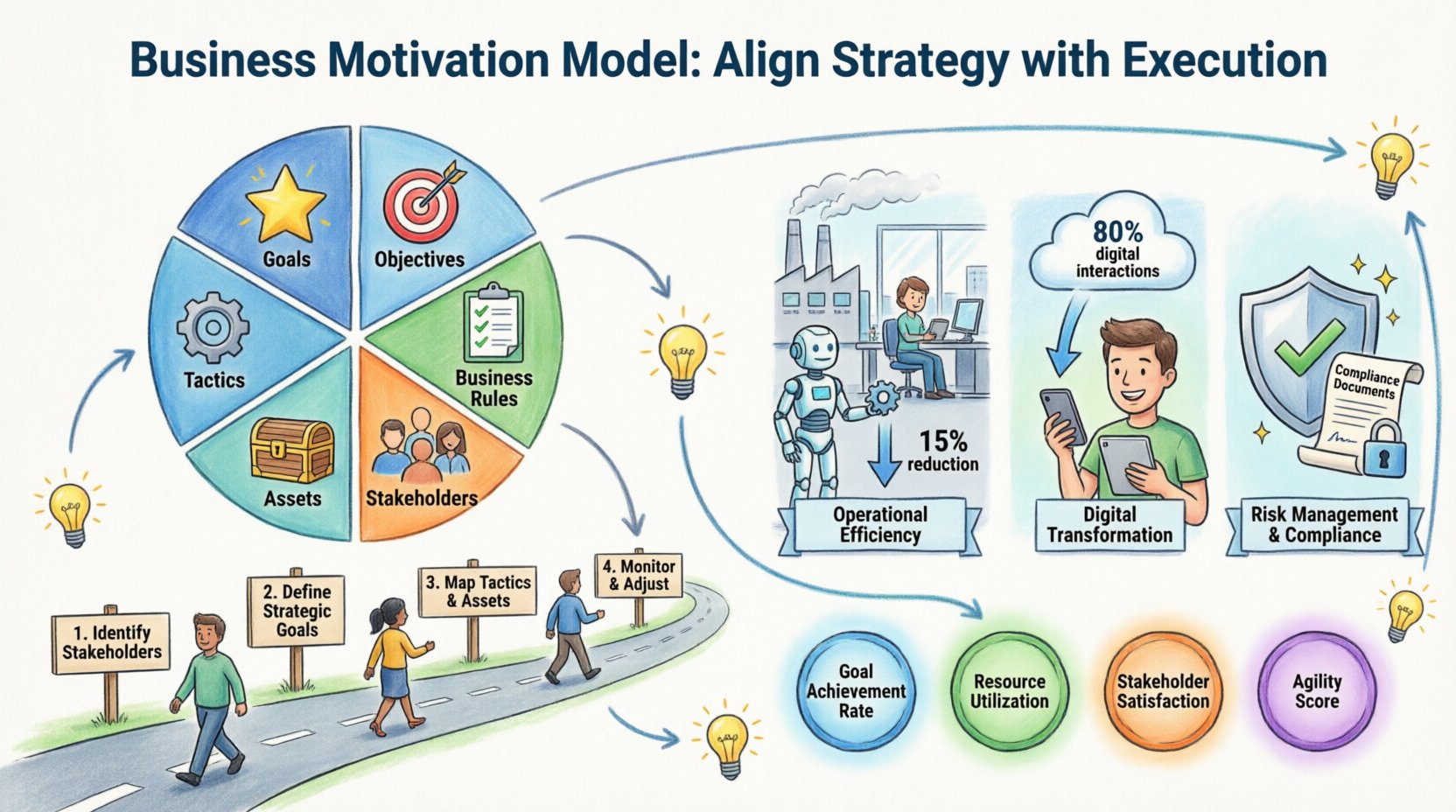
🧩 Core Components of the Business Motivation Model
Before diving into specific examples, it is essential to understand the foundational elements that make up the model. These components work together to create a coherent picture of organizational intent.
- Goals: These represent the desired outcomes. They can be strategic, tactical, or operational in nature.
- Objectives: Specific, measurable targets that support broader goals.
- Tactics: The actions or methods chosen to achieve objectives.
- Business Rules: Constraints or policies that guide decision-making.
- Assets: Resources, capabilities, and knowledge required to execute tactics.
- Stakeholders: Individuals or groups affected by the business activities.
When these elements are mapped correctly, the relationship between high-level ambition and ground-level execution becomes clear. This clarity reduces ambiguity and ensures resources are allocated efficiently.
📊 Example 1: Optimizing Operational Efficiency
One of the most common applications of the Business Motivation Model is improving operational efficiency. In this scenario, the enterprise aims to reduce costs while maintaining or improving service quality. The model helps visualize how specific process changes impact the bottom line.
🎯 Defining the Goal
The primary goal is defined as Cost Reduction and Process Streamlining. This is not merely about cutting budgets but about eliminating waste and redundancy.
- Objective: Reduce operational overhead by 15% within 12 months.
- Tactic: Automate manual data entry processes.
- Business Rule: All financial transactions must be auditable.
- Asset: Existing legacy systems and skilled workforce.
🔗 Linking Tactics to Assets
Using the model, teams can identify which assets are needed to support the tactic. For instance, if the tactic involves automation, the asset inventory must include software capabilities and technical expertise. If these assets are missing, the tactic cannot proceed, highlighting a gap in the plan.
📉 Impact Analysis
| Component | Current State | Target State | Gap |
|---|---|---|---|
| Process Speed | 5 days per cycle | 2 days per cycle | -60% |
| Cost per Unit | $50.00 | $42.50 | -15% |
| Human Error Rate | 3.5% | <1.0% | -71% |
This tabular view allows stakeholders to see the direct correlation between the chosen tactics and the desired outcomes. It moves the conversation from abstract ideas to measurable metrics.
💡 Example 2: Driving Digital Transformation
Digital transformation is often cited as a goal, but it is rarely defined clearly enough to be actionable. The Business Motivation Model provides the structure to break down this broad concept into manageable pieces. This example focuses on an organization shifting from traditional service delivery to a digital-first model.
🚀 Strategic Intent
The overarching goal here is Customer Experience Modernization. The motivation is to meet evolving customer expectations and stay competitive in a digital economy.
- Goal: Become a digital-first service provider.
- Objective: Achieve 80% of customer interactions via digital channels.
- Tactic: Develop a mobile application for customer support.
- Stakeholder: Customer Service Representatives and End Users.
🛡️ Managing Dependencies
In digital transformation, dependencies are critical. The model helps map out what needs to happen before a tactic can be executed. For the mobile application tactic, the following dependencies might exist:
- Requirement: Secure API integration with backend systems.
- Constraint: Compliance with data privacy regulations.
- Resource: Development team availability.
By documenting these dependencies, the enterprise avoids bottlenecks. If the API integration is delayed, the tactic timeline is adjusted proactively. This foresight is a key advantage of using the model.
🔄 Feedback Loops
Unlike static plans, the Business Motivation Model supports iterative improvement. As the digital product launches, stakeholder feedback is captured. This feedback can trigger a revision of the business rules or the tactics themselves. The model is dynamic, adapting to real-world usage rather than remaining a theoretical document.
🛡️ Example 3: Enhancing Risk Management and Compliance
In highly regulated industries, the Business Motivation Model is invaluable for managing risk. It ensures that compliance is not an afterthought but a foundational element of business strategy. This example illustrates how a financial institution aligns its operations with regulatory requirements.
⚖️ Compliance as a Goal
Here, compliance is treated as a strategic goal rather than a constraint. The motivation is to maintain trust and avoid penalties.
- Goal: Maintain 100% regulatory compliance.
- Objective: Zero audit findings regarding data handling.
- Tactic: Implement automated compliance monitoring tools.
- Business Rule: Data retention must follow local laws.
🔍 Risk Assessment
The model facilitates a clear view of risk exposure. By linking assets to goals, the organization can see which assets pose the highest risk if they fail.
- High Risk Asset: Customer Database.
- Associated Goal: Trust and Data Integrity.
- Mitigation Tactic: Redundant backups and encryption.
This structured approach ensures that risk mitigation is directly tied to business value. It prevents the common pitfall of implementing security measures that do not actually protect critical business goals.
🛠️ Implementation Strategy
Adopting the Business Motivation Model requires a disciplined approach. It is not enough to simply document goals; the organization must integrate the model into its planning and execution cycles.
📝 Step 1: Identify Stakeholders
Begin by listing all individuals and groups who influence or are influenced by the business. This includes executives, employees, customers, and regulators. Each stakeholder group has different motivations that must be respected and aligned.
🎯 Step 2: Define Strategic Goals
Work with leadership to articulate the high-level goals. These should be broad enough to provide direction but specific enough to guide decision-making. Avoid vague statements; focus on outcomes that matter.
🔗 Step 3: Map Tactics and Assets
Connect the goals to specific actions. Identify what is needed to execute these actions. This step often reveals gaps in resources or capabilities that must be addressed before full implementation.
📈 Step 4: Monitor and Adjust
Establish metrics to track progress. Regularly review the model to ensure it remains relevant. Business environments change, and the motivation model must evolve to reflect new realities.
📈 Measuring Success
Success in this context is not just about hitting targets. It is about the alignment between what was planned and what was delivered. The following metrics help evaluate the effectiveness of the Business Motivation Model implementation.
- Goal Achievement Rate: Percentage of defined goals met within the timeframe.
- Resource Utilization: Efficiency of asset usage in relation to tactics.
- Stakeholder Satisfaction: Feedback from key groups regarding the process.
- Agility Score: Speed of adaptation when business rules or goals change.
Tracking these metrics ensures that the model adds value. If the documentation becomes a burden without improving decision-making, the approach needs refinement.
🚧 Common Challenges and Solutions
Implementing any framework comes with hurdles. Recognizing these challenges early allows for better preparation and mitigation.
❌ Challenge: Over-Complexity
Teams sometimes create models that are too detailed. This leads to analysis paralysis where the map becomes more important than the territory.
- Solution: Focus on the top-level goals first. Add detail only as needed for specific projects.
❌ Challenge: Lack of Ownership
If no one is responsible for maintaining the model, it quickly becomes outdated.
- Solution: Assign a specific role, such as a Business Architect, to maintain the integrity of the model.
❌ Challenge: Disconnect from Execution
The model sits in a document while operations continue as usual.
- Solution: Integrate the model into regular project management meetings. Reference goals when discussing task assignments.
🌐 Future Trends in Business Motivation Modeling
The landscape of business architecture is evolving. As organizations become more agile, the Business Motivation Model is adapting to support faster change cycles.
- Integration with Data Analytics: Using real-time data to update goal progress dynamically.
- Collaborative Tools: Platforms that allow multiple stakeholders to contribute to the model simultaneously.
- AI-Assisted Planning: Leveraging algorithms to suggest tactics based on historical performance.
These trends suggest that the model will become more interactive and data-driven. The core principles remain the same, but the tools and methods for application will advance.
🔑 Summary of Key Takeaways
The Business Motivation Model provides a structured way to align strategy with execution. By defining goals, objectives, tactics, and assets clearly, organizations can navigate complexity with confidence.
- Clarity: It removes ambiguity from strategic planning.
- Alignment: It ensures all efforts support the core mission.
- Adaptability: It allows for changes in the business environment without losing sight of the goal.
Organizations that invest time in understanding and applying this model gain a significant advantage. They are better equipped to handle change, manage risk, and deliver value to their stakeholders. The focus remains on sustainable success through disciplined planning and execution.
Whether the aim is cost reduction, digital innovation, or risk management, the principles of the Business Motivation Model offer a reliable path forward. By leveraging these examples and strategies, enterprises can build a resilient foundation for growth.