


Modeling for Everyone: Bridging the Gap Between Ideas and Visuals
For decades, the process of creating, refining, and analyzing visual models was labor-intensive, tool-dependent, and often inaccessible to non-experts. Professionals across software engineering, business strategy, and systems design faced a common bottleneck: the “gap” between having a clear concept and the ability to express it through complex, standards-compliant diagrams. The Visual Paradigm AI Chatbot represents a significant paradigm shift, transforming visual modeling from a technical chore into a conversational, inclusive experience that democratizes architectural thinking.
Breaking the Technical Barrier
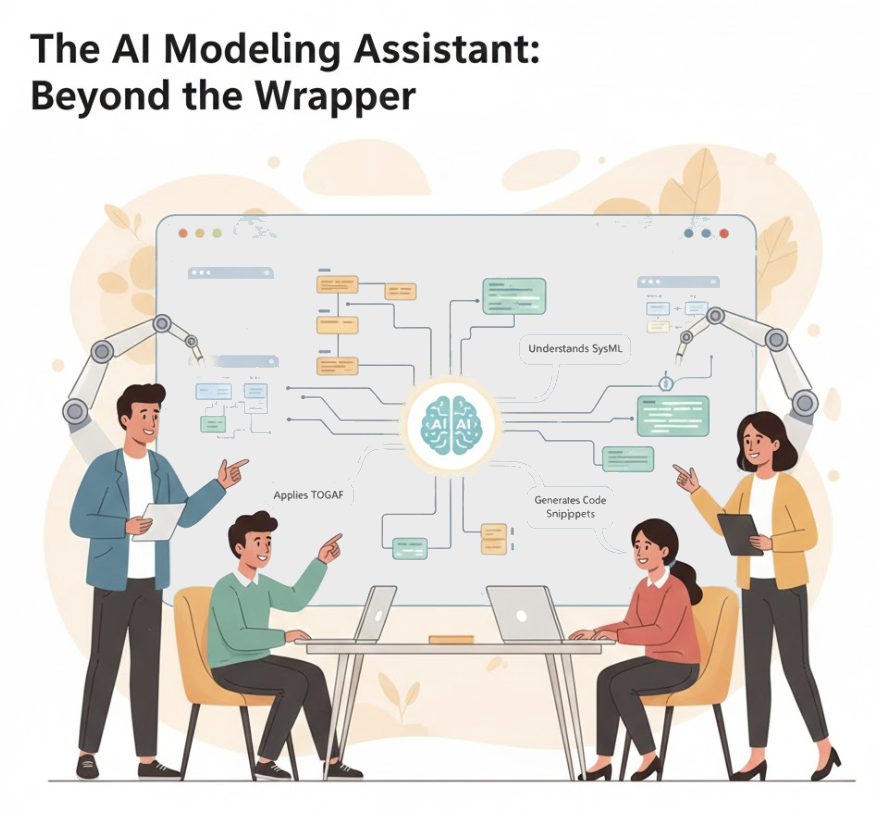
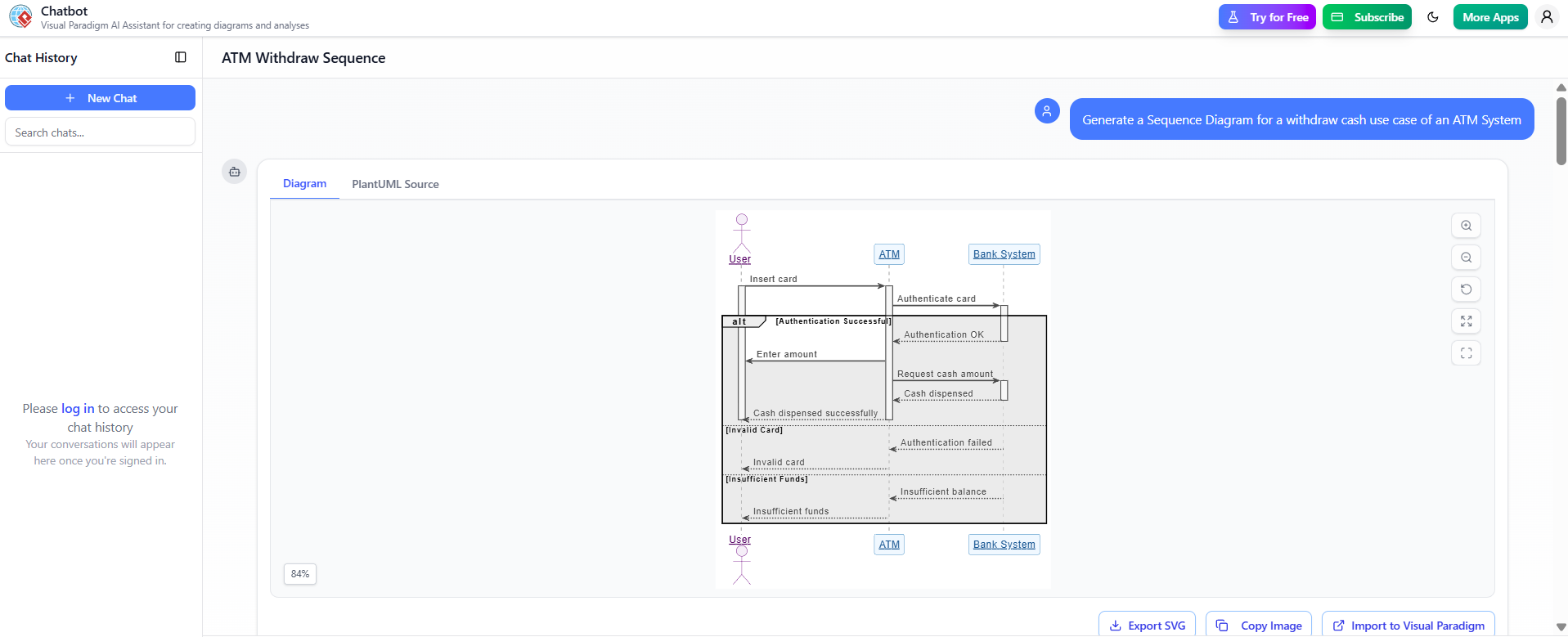
Traditional diagramming tools require users to master specific syntax, rules, and formatting, such as UML, SysML, or ArchiMate. This often excludes non-technical stakeholders—such as project managers, startup founders, and consultants—from participating meaningfully in design conversations. The AI chatbot eliminates this barrier through natural language diagram generation, allowing users to simply describe what they want to see in plain English. Whether a user says, “Create a sequence diagram for how a customer places an order,” or “Generate a SWOT analysis for a local coffee shop,” the tool interprets the intent and renders a professional-grade diagram in seconds.
Structural Fidelity: AI That “Thinks in Diagrams”
A primary difference between the Visual Paradigm AI Chatbot and generic AI tools is the depth of its specialized training. While generic assistants often produce “syntactically plausible but semantically flawed” sketches, this chatbot is trained on formal modeling standards like OMG UML 2.5.1 and ISO/IEC/IEEE 24765.
It employs a semantic constraint engine that enforces metamodel compliance at generation time, ensuring the output reflects real-world engineering logic rather than just drawing visually plausible shapes. For example, the AI understands the difference between a process and a sub-process, or a class and an attribute, ensuring that every diagram is a conceptually accurate, production-ready model.
Conversational Refinement: The Living Model
Modeling is rarely a one-off task; it is an iterative journey. The chatbot functions as a proactive “Creative Co-Pilot” by maintaining a context-aware dialogue. This allows users to evolve their designs live without starting from scratch. Through simple, plain-English commands like “Add a two-factor authentication step” or “Rename ‘User’ to ‘Customer’ everywhere,” the AI instantly updates the visual output while maintaining logical coherence across all relationships. This iterative flow mimics agile sprints, turning “what if” discussions into instant visuals.
Empowering a Global and Inclusive Workflow
The tool further bridges the gap for global teams by offering robust multilingual support. Users can prompt the AI in their native language—including Español, Français, Japanese, Chinese, and many others—and receive diagrams with actors and processes labeled appropriately in that language. Beyond visuals, the AI can reason over the model to identify design flaws, such as “single points of failure,” and generate on-demand documentation like project summaries and technical specifications to keep all stakeholders aligned.
From Rapid Prototyping to Professional Engineering
While the AI handles the initial heavy lifting, the system is deeply integrated with the Visual Paradigm Desktop environment. AI-generated diagrams are not static images; they are “first-class modeling objects” that can be imported directly for advanced tasks like simulating timings or managing complex traceability across large projects. This synergy between rapid AI prototype and desktop precision allows users to achieve up to 90% time savings in their modeling workflows.
Analogy for Understanding: Using the Visual Paradigm AI Chatbot is like working with a master architect who sits beside you, sketching your thoughts as fast as you can speak them. While a generic AI might draw a “sketch” that looks like a house but lacks structural integrity, this co-pilot ensures that every “blueprint” it generates follows strict building codes and professional engineering standards, making it ready for a construction crew to build immediately.
- AI Chatbot Feature – Intelligent Assistance for Visual Paradigm Users: Leverage AI-powered chatbot functionality to get instant guidance, automate tasks, and enhance productivity within Visual Paradigm.
- Visual Paradigm AI Chatbot Enhances Multi-Language Support …: 7 hours ago · Discover the latest updates to Visual Paradigm ‘s AI -Powered visual modeling software, including multi-language UI and improved chat content localization. Experience seamless AI diagram generation in languages like Spanish, French, Chinese, and more with our AI chatbot for UML and other diagrams.
- AI Chatbot for Diagramming: How It Works with Visual Paradigm: The Visual Paradigm AI chatbot is an AI -powered modeling assistant that turns natural language into diagrams. It doesn’t require users to learn specific modeling standards or syntax.
- Case Study: Enhancing System Modeling Efficiency with Visual Paradigm’s AI-Powered Chatbot: This case study demonstrates how Visual Paradigm’s AI chatbot improves productivity and accuracy in system modeling by enabling conversational diagram creation.
- Visual Paradigm AI Chatbot: The World’s First Purpose-Built AI Assistant for Visual Modeling: Visual Paradigm launches its groundbreaking AI chatbot, designed specifically to assist users in visual modeling tasks with natural language interactions and intelligent guidance.
- Introducing Visual Paradigm AI Chatbot: Intelligent Design Assistance: Discover how Visual Paradigm’s AI chatbot enhances design workflows by offering real-time suggestions and automating repetitive tasks.
- Mastering Sequence Diagrams with Visual Paradigm: AI Chatbot Tutorial: A beginner-friendly tutorial using Visual Paradigm to create sequence diagrams, illustrated through a real-world e-commerce chatbot use case.
- Integrating AI Activity Diagrams into Your Visual Paradigm …: Sep 12, 2025 · Learn how to use AI -powered modeling software to generate and refine activity diagrams with natural language. Discover the benefits of AI chatbot diagram generation in UML workflows.
- Beginner’s Tutorial: Create Your First Professional Sequence Diagram in Minutes: A beginner-friendly guide to generating professional sequence diagrams quickly using Visual Paradigm’s AI chatbot feature.
- Comprehensive Tutorial: Generating and Modifying C4 Component …: Dec 16, 2025 · This tutorial is based on the official Visual Paradigm product demo video, demonstrating how to use the AI-powered Chatbot to create and iteratively refine a C4 Component Diagram for a car park booking system. The C4 model (Context, Containers, Components, and Code) is a popular approach for visualizing software architecture, and the Component level focuses on the internal structure of a …
- SWOT Analysis via AI Chat in Visual Paradigm: This interactive page allows users to generate SWOT analyses through an AI-powered chat interface within the Visual Paradigm environment.
- Meet the AI SWOT Assistant: How Visual Paradigm’s Chatbot …: Sep 11, 2025 · Discover how the visual paradigm chatbot provides natural language diagram generation for business frameworks like SWOT , PEST, and more—turning ideas into clear strategic models with AI -powered analysis .