
Object-Oriented Analysis and Design (OOAD) forms the backbone of modern software architecture. It provides a structured approach to understanding requirements, modeling systems, and creating robust codebases. Whether you are a novice developer or a seasoned engineer, mastering these concepts ensures scalable and maintainable solutions. This guide outlines the essential materials available to deepen your understanding of system modeling and design principles.
Learning OOAD requires a blend of theoretical knowledge and practical application. The landscape of resources is vast, ranging from classic textbooks to interactive workshops. Selecting the right material depends on your current proficiency and learning style. We will explore ten distinct categories of resources that cover the full spectrum of analysis and design.
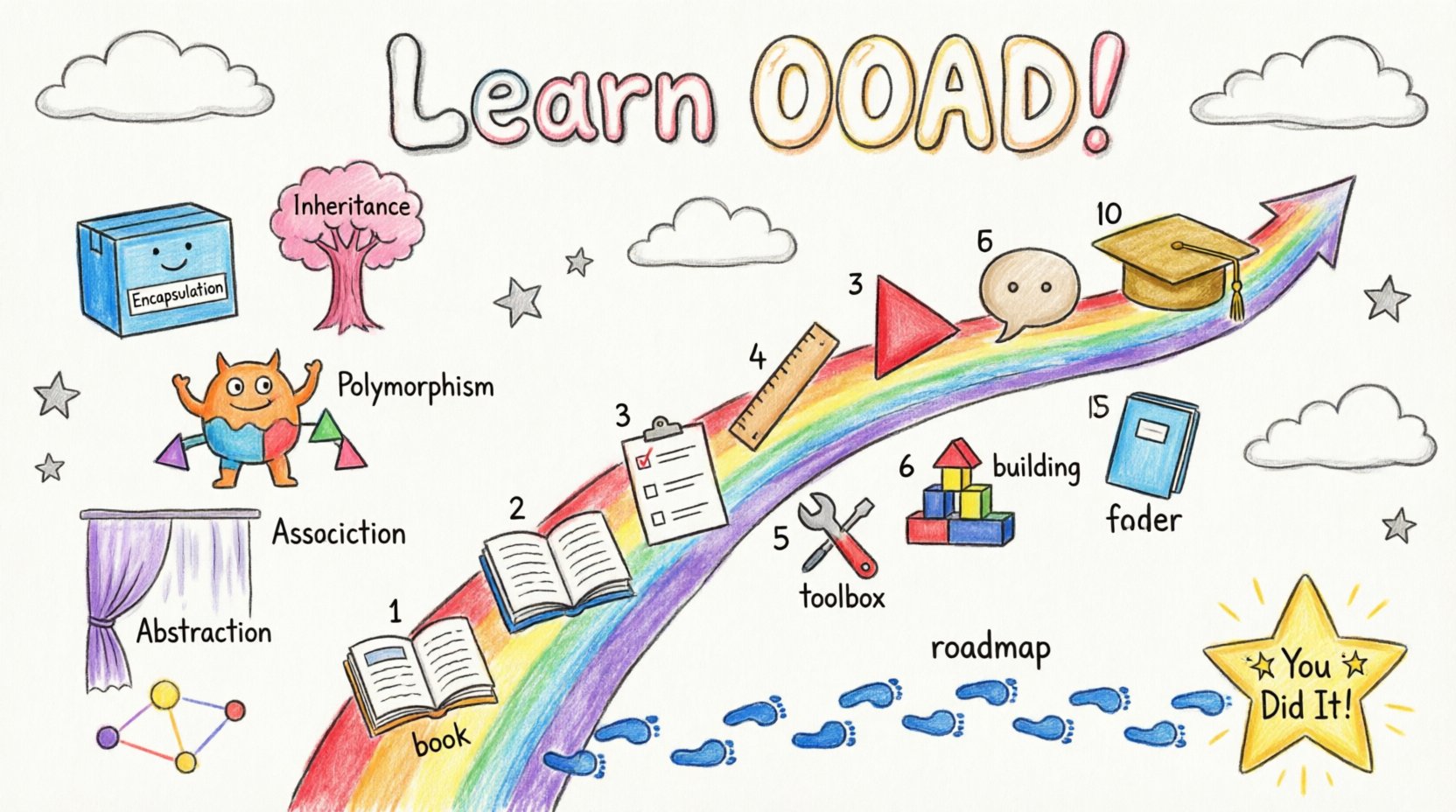
Foundational Pillars of OOAD 🏛️
Before diving into specific tools or courses, it is crucial to grasp the underlying principles. OOAD is not merely about drawing diagrams; it is about thinking in terms of objects, behaviors, and interactions. The process typically involves identifying objects, defining their responsibilities, and establishing relationships between them.
Key Concepts to Master
- Encapsulation: Bundling data and methods that operate on that data within one unit.
- Inheritance: Creating new classes based on existing ones to promote code reuse.
- Polymorphism: Allowing objects to respond to the same message in different ways.
- Abstraction: Hiding complex implementation details and showing only essential features.
- Association: Defining relationships between objects in a system.
Without a solid grasp of these pillars, advanced modeling techniques can become confusing. The following resources are curated to help you build this foundation effectively.
10 Essential Resources for OOAD 📚
Below is a curated list of ten high-quality resources. These selections focus on content, methodology, and community support rather than proprietary software tools.
1. The Classic Textbook on Patterns 📖
One of the most recognized works in the industry provides a catalog of reusable solutions to common design problems. It introduces the concept of design patterns, which are templates for solving issues that occur repeatedly. Studying this resource helps developers recognize recurring problems and apply established solutions.
- Focuses on Gang of Four design patterns.
- Provides concrete examples for each pattern.
- Essential for understanding code structure.
2. Comprehensive Methodology Guides 📋
Methodologies provide a framework for the entire development lifecycle. Many organizations adopt specific processes to manage complexity. Learning about these frameworks helps you understand where analysis and design fit into the broader project timeline.
- Integrates analysis with implementation.
- Defines roles and responsibilities clearly.
- Supports iterative development cycles.
3. UML Notation Standards 📐
The Unified Modeling Language is the standard for visualizing system designs. It includes various diagram types such as class diagrams, sequence diagrams, and use case diagrams. Understanding the syntax and semantics of UML is non-negotiable for effective communication among stakeholders.
- Standardizes communication between teams.
- Visualizes static and dynamic aspects.
- Supports documentation and planning.
4. Open Educational Coursework 🎥
Digital learning environments offer structured modules on software engineering. These courses often include video lectures, reading materials, and quizzes. They are excellent for self-paced learning and allow you to revisit complex topics.
- Flexible learning schedules.
- Certification options available.
- Access to peer discussion forums.
5. Community Forums and Discussion Boards 💬
Engaging with a community allows you to ask questions and share insights. Real-world problems often arise that textbooks do not cover. Forums provide a space to discuss edge cases and practical challenges faced during implementation.
- Direct feedback from experienced practitioners.
- Access to archived discussions.
- Networking opportunities with peers.
6. Academic Papers and Research 🎓
Academic institutions often publish research on new modeling techniques and theoretical advancements. Reading these papers exposes you to the cutting edge of software engineering. They provide deep insights into the mathematical and logical underpinnings of design.
- Covers emerging trends in architecture.
- Validates practices with empirical data.
- Encourages critical thinking.
7. Interactive Modeling Workshops 🛠️
Live sessions allow for hands-on practice with system modeling. Instructors guide participants through real scenarios, correcting mistakes in real-time. This immediate feedback loop accelerates the learning process significantly.
- Practical application of theory.
- Collaborative problem solving.
- Expert guidance on specific challenges.
8. Industry Case Studies 🏢
Examining how large systems were architected offers valuable lessons. Case studies reveal the trade-offs made during the design phase. They highlight why certain decisions were made and what the consequences were.
- Real-world context for abstract concepts.
- Analysis of success and failure points.
- Insight into scalability and performance.
9. Online Documentation Repositories 📂
Many organizations maintain public documentation of their design processes. These repositories serve as reference materials for standard practices. They often include templates for requirement specifications and design documents.
- Ready-to-use templates.
- Standardized formats.
- Best practice examples.
10. Specialized Blogs and Articles ✍️
Technical blogs written by practitioners often focus on specific aspects of OOAD. They provide concise explanations of complex topics. Regular reading keeps you updated on shifts in the industry landscape.
- Up-to-date information.
- Diverse perspectives.
- Quick reference guides.
Resource Comparison Table 📊
To assist in selecting the most appropriate materials, the table below compares the resources based on difficulty, focus area, and format.
| Resource Type | Difficulty | Primary Focus | Format |
|---|---|---|---|
| Pattern Books | Intermediate | Code Structure | Print/Digital |
| Methodology Guides | Beginner | Process Management | PDF/Web |
| UML Standards | Intermediate | Visual Modeling | Documentation |
| Online Courses | Beginner/Intermediate | Comprehensive Learning | Video/Interactive |
| Community Forums | All Levels | Problem Solving | Text/Chat |
| Academic Papers | Advanced | Theory & Research | |
| Workshops | Intermediate | Hands-on Practice | Live Session |
| Case Studies | Intermediate | Real-world Application | Text/Cases |
| Documentation Repos | Beginner | Templates & Standards | Web/Download |
| Technical Blogs | All Levels | Industry Trends | Web Articles |
How to Evaluate a Learning Resource 🔍
Not all materials are created equal. When choosing a resource, consider the following criteria to ensure it aligns with your goals.
- Author Credibility: Check the background of the writer or organization. Look for industry experience.
- Recency: Software engineering evolves. Ensure the content reflects current best practices.
- Depth of Coverage: Does it cover the analysis phase, or does it skip straight to coding?
- Practical Examples: Theory without practice is often forgettable. Look for code or diagram examples.
- Reviews and Feedback: See what other learners have said about the material.
Common Pitfalls in OOAD Learning ⚠️
Even with excellent resources, learners can encounter obstacles. Being aware of these common issues can help you navigate your study path more effectively.
1. Over-Modeling
Creating diagrams that are too detailed can waste time. The goal is communication, not artistic perfection. Focus on the aspects that matter for implementation.
2. Ignoring Requirements
Design without understanding requirements leads to the wrong solution. Always verify that your design addresses the actual needs of the users.
3. Neglecting Refactoring
Design is not a one-time event. As requirements change, the design must evolve. Continuous improvement is part of the process.
4. Isolated Learning
Studying alone can limit perspective. Collaborate with others to review your designs. Peer review often catches errors that individuals miss.
Building a Personal Roadmap 🗺️
A structured approach to learning ensures steady progress. Here is a suggested roadmap for developing your OOAD skills.
- Start with Fundamentals: Learn the core object-oriented principles.
- Master UML: Become comfortable with the standard notation.
- Study Patterns: Understand the common solutions to design problems.
- Practice Modeling: Create diagrams for hypothetical systems.
- Review Code: Analyze existing open-source projects for design quality.
- Engage with Community: Discuss your designs and seek feedback.
- Apply in Real Projects: Use your skills in actual development tasks.
Advanced Topics for Further Study 🚀
Once you have grasped the basics, you can explore more complex areas. These topics deepen your understanding of system architecture.
- Domain-Driven Design: Aligning software structure with business domains.
- Architectural Styles: Microservices, layered architecture, and event-driven systems.
- Testing Strategies: How design impacts testability and quality assurance.
- Performance Optimization: Designing for speed and resource efficiency.
- Security Considerations: Building secure systems from the ground up.
The Role of Documentation 📝
Documentation is a critical output of the analysis and design phase. It serves as a contract between stakeholders and developers. High-quality documentation reduces ambiguity and supports future maintenance.
When creating documentation, follow these guidelines:
- Keep it concise and relevant.
- Use standard diagrams and terminology.
- Ensure it is versioned and accessible.
- Update it whenever the system changes.
- Write for the audience, not just for the machine.
Final Thoughts on Continuous Growth 🌱
Object-Oriented Analysis and Design is a journey, not a destination. The tools and techniques evolve, but the core principles of clear thinking and structured modeling remain constant. By utilizing the resources listed above, you can build a strong foundation. Consistent practice and a willingness to adapt will define your success in this field.
Remember to balance theory with practice. Reading a book is valuable, but applying the concepts to a real problem cements the knowledge. Engage with the community to stay motivated and informed. The path to becoming a proficient designer is paved with curiosity and dedication.
Start with one resource today. Dedicate time to understanding the concepts deeply. Over time, the complexity of systems will become manageable. Your ability to model and design will become a significant asset in your professional career.
Continue to explore, question, and refine your approach. The world of software engineering rewards those who take the time to build solid structures. Let your learning process be guided by the resources provided here.