
The landscape of user experience design is shifting beneath our feet. What began as simple screen-based interactions has evolved into complex, multi-sensory environments. For Human-Computer Interaction (HCI) specialists and industrial designers, the horizon is not just about better screens; it is about better connections between humans, technology, and the physical world. This guide explores the critical shifts defining the future of interaction design.
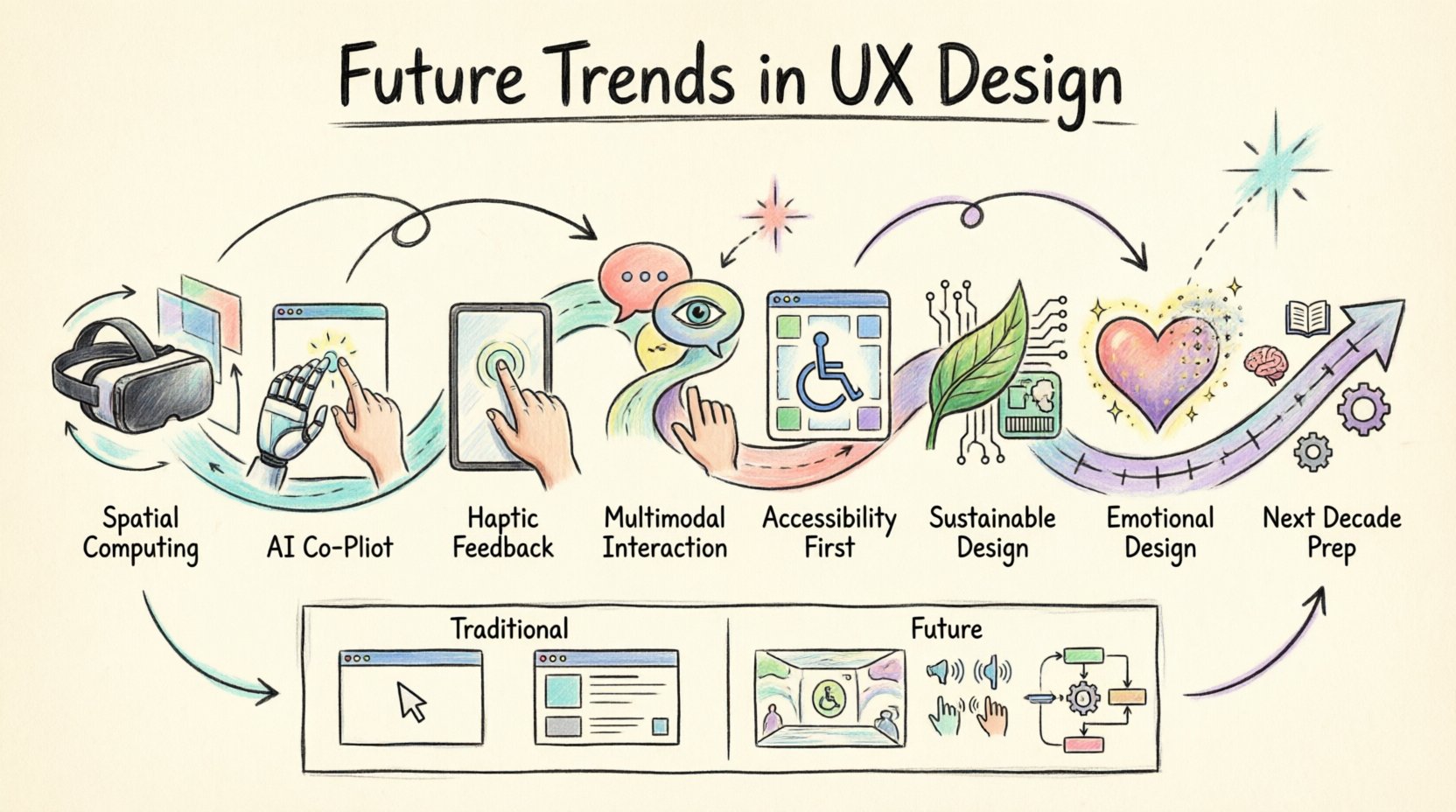
1. The Shift to Spatial Computing and Immersive Environments 🕶️
Traditional interfaces were constrained by the rectangle. We scrolled, clicked, and tapped within defined boundaries. Today, we are moving toward spatial computing. This paradigm treats digital content as an object that exists within the user’s physical space rather than confined to a display. For industrial designers, this means considering depth, scale, and physical proximity as core design variables.
- Depth and Layering: Interfaces must now manage Z-axis information. Designers need to understand how to layer content without causing visual clutter or motion sickness.
- Gestural Navigation: Touch is no longer the only input. Hand tracking, eye tracking, and head movement are becoming standard interaction modes.
- Context Awareness: Devices will sense the environment. A map app might adjust its display based on whether you are walking, driving, or sitting in a park.
This transition requires a fundamental rethinking of how we structure information. It is no longer about wireframes; it is about volumetric design and spatial hierarchy.
2. Artificial Intelligence as a Co-Pilot in Design 🤖
Artificial Intelligence is not replacing designers; it is augmenting their capabilities. Generative models allow for rapid prototyping, but the real shift lies in adaptive interfaces. Systems are becoming capable of anticipating user needs before they are explicitly stated.
- Predictive Interactions: Interfaces can adjust layouts based on predicted user intent, reducing the number of taps required to complete a task.
- Personalized Accessibility: AI can dynamically modify contrast, font sizes, and navigation flows to suit individual cognitive and physical needs in real-time.
- Automated Accessibility Audits: Tools can now scan designs for compliance with standards, ensuring inclusivity is baked into the development phase rather than tested later.
Designers must now focus on curating and guiding these AI systems. The skill set shifts from manual pixel-pushing to defining constraints, ethics, and behavioral logic for intelligent systems.
3. Sensory Design and Haptic Feedback 🖐️
Visual and auditory channels are becoming saturated. The next frontier is tactile engagement. Industrial designers are increasingly integrating haptic technology into devices and interfaces to provide physical feedback in digital contexts.
- Texture Simulation: Screens can simulate the feeling of turning a page or pressing a button through localized vibrations.
- Thermal Feedback: Emerging tech allows displays to change temperature, indicating hot or cold objects in a digital interface.
- Force Sensing: Devices can detect how hard a user is pressing, allowing for nuanced controls like pressure-sensitive sliders.
This adds a layer of realism that reduces cognitive load. When a user feels a click, they do not need to look to confirm the action, improving efficiency and safety.
4. Multimodal Interaction Models 🗣️
No single input method will suffice for all users or all contexts. The future lies in multimodal interfaces that combine voice, touch, gaze, and gesture seamlessly. This approach ensures robustness; if one channel fails, another can take over.
Consider a scenario where a user is driving. Voice commands are primary. If they are cooking, hands-free gestures are vital. If they are in a quiet library, subtle eye tracking might be the only option. Designing for this fluidity requires understanding the context of use deeply.
- Context Switching: The system must recognize the user’s current environment and prioritize the appropriate input mode.
- Redundancy: Critical actions should be confirmable through multiple channels to prevent errors.
- Seamless Transitions: Moving from one input mode to another should not interrupt the user’s flow or require re-authentication.
5. Accessibility as a Standard, Not an Afterthought ♿
Accessibility is moving from a compliance checkbox to a core design principle. Neurodiversity, motor impairments, and sensory processing differences are being considered in the initial concept phase. This shift benefits everyone, not just those with disabilities.
- Cognitive Load Management: Interfaces are designed to reduce decision fatigue. Simplified choices and clear feedback loops are prioritized.
- Customizable Interfaces: Users can redefine the interface to match their specific needs, such as high-contrast modes or text-to-speech overrides.
- Inclusive Language: Copywriting is being audited for bias and clarity to ensure understanding across different cultural and linguistic backgrounds.
Designers must learn to empathize with a wider range of human experiences. Testing with diverse groups is no longer optional; it is essential for market reach.
6. Sustainable and Ethical Design 🌱
The environmental impact of digital products is becoming a major concern. Carbon footprint, energy consumption, and device longevity are now part of the design equation. Industrial designers are considering the physical lifecycle of hardware, while digital designers are optimizing code for energy efficiency.
- Digital Carbon Footprint: Heavy animations and high-resolution assets consume more energy. Designers are choosing performance over polish where appropriate.
- Right to Repair: Hardware design is favoring modularity, allowing users to replace batteries or screens rather than buying new units.
- Longevity: Software is being designed to run on older hardware, extending the usable life of devices.
Ethics also extend to data privacy. Users are demanding transparency about how their data is used. Trust is the new currency of the user experience.
7. Emotional Design and Psychology ❤️
Technology is becoming more intimate. It knows our moods, our habits, and our preferences. Designers must navigate the fine line between helpful assistance and intrusive monitoring. Emotional design focuses on how users feel while interacting with a system.
- Empathy in Feedback: Error messages should be human and supportive, not robotic and blaming.
- Delight: Micro-interactions that provide a sense of satisfaction, like a satisfying sound or animation, build a positive relationship with the product.
- Trust Building: Consistency and reliability create a sense of safety. Users should feel in control of their interactions.
Understanding psychology helps designers create experiences that resonate on a human level, fostering loyalty and engagement.
8. Comparison: Traditional vs. Future Interfaces
To visualize the shift, consider the following comparison between current standard practices and emerging methodologies.
| Feature | Traditional Interface | Future Interface |
|---|---|---|
| Input Method | Mouse and Keyboard | Voice, Gesture, Gaze, Haptic |
| Display | Flat 2D Screens | Spatial, AR, VR, Ambient |
| Personalization | Static User Profiles | Adaptive, Real-time AI Adjustments |
| Feedback | Visual and Auditory | Sensory, Tactile, Haptic |
| Accessibility | Post-Design Compliance | Integrated from Concept |
| Sustainability | Hardware Replacement Cycle | Modular, Energy Efficient |
9. Challenges and Considerations ⚠️
While the future holds promise, it presents significant hurdles. Designers must be prepared to navigate complexity, ethical dilemmas, and technical limitations.
- Privacy and Security: As devices gather more biometric and behavioral data, securing that information becomes paramount. A breach of trust can destroy a brand.
- Skill Gaps: The toolkit for designers is expanding. Learning spatial logic, AI ethics, and haptic engineering takes time and resources.
- Standardization: Unlike the web, where standards are well-defined, spatial and multimodal experiences lack universal guidelines. Designers must advocate for consistency.
- Cost of Adoption: New hardware and development environments can be expensive. Small teams may struggle to compete with large tech giants.
Addressing these challenges requires collaboration across disciplines. Engineers, psychologists, ethicists, and designers must work in tandem to build systems that are robust and humane.
10. Preparing for the Next Decade 📅
How can practitioners prepare for these changes? Continuous learning is the baseline. Staying updated with research papers, attending conferences, and experimenting with new hardware is necessary.
- Focus on Fundamentals: Core principles of psychology, ergonomics, and visual hierarchy remain relevant even as the medium changes.
- Cultivate Empathy: Understanding the human condition is more important than knowing the latest technology.
- Build Resilience: Be willing to unlearn old methods. The tools of yesterday may not serve the problems of tomorrow.
- Collaborate: No single person has all the answers. Cross-functional teams drive innovation.
The trajectory of UX design is clear. It is moving away from static screens and towards dynamic, responsive, and human-centric ecosystems. For those willing to adapt, the opportunities are vast.